The short answer
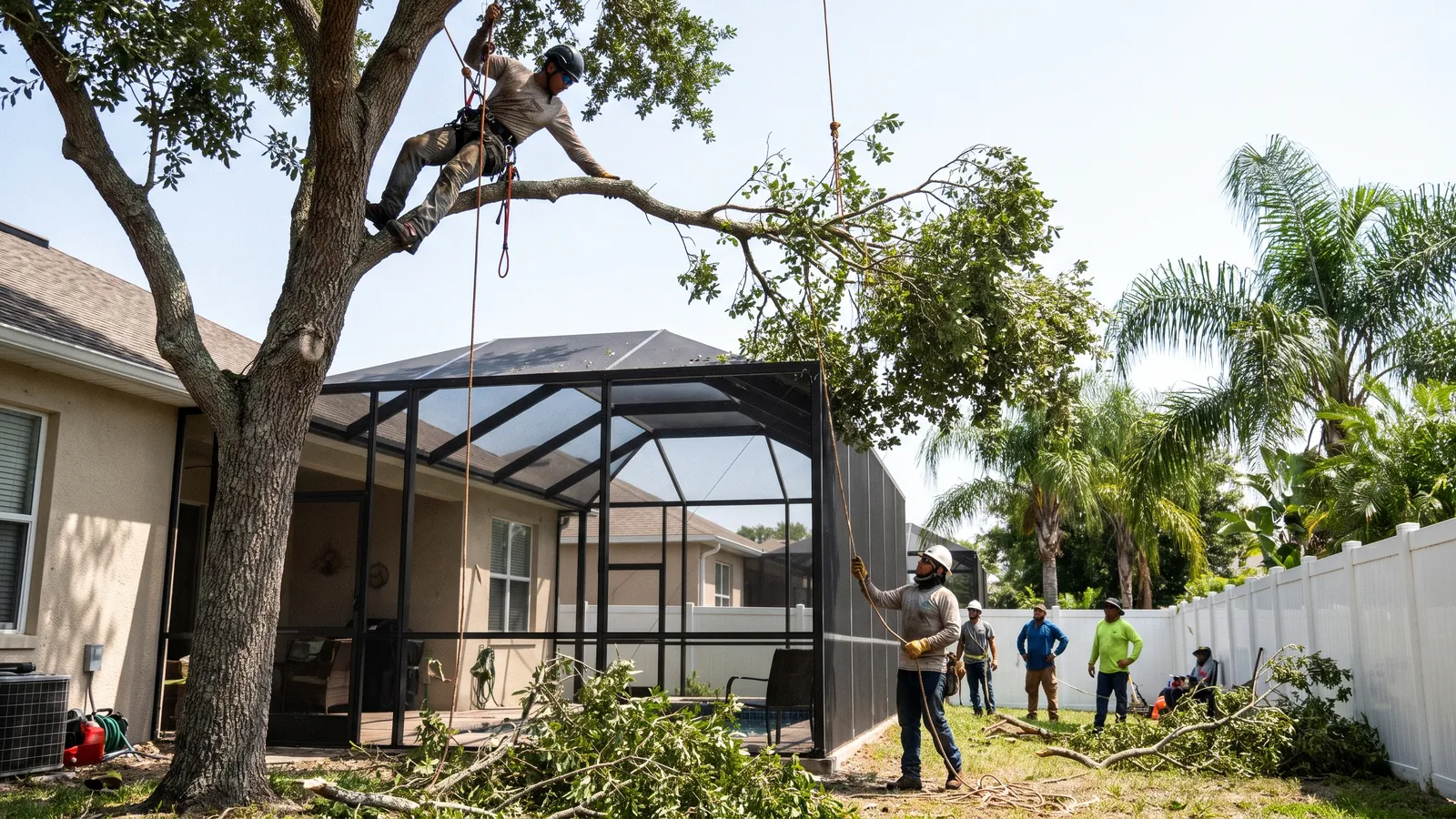
Most tree removals in Palm Bay cost between $450 and $3,200 in 2026. A queen palm, a Washingtonia or a 30-foot pine on an open lot is $350 to $750. A medium oak or pine of 30 to 50 feet that has to be rigged down near the house or the pool cage is $900 to $2,000. A large laurel or live oak of 50 to 70 feet over the house or a canal is $2,000 to $3,800, and if it's hollow or on the roof and needs a crane, add $1,200 to $2,800. Stump grinding is separate — $120 to $450 by diameter — and so is an emergency call-out at night. Those are Brevard County ranges for an insured crew with an arborist; a cash price from a truck with no insurance is lower and is not the same product.
By tree
| Tree | 2026 range | What drives it |
|---|---|---|
| Queen palm, sabal or Washingtonia, open access | $300 – $750 | Felled whole, hauled; tall Washingtonias higher |
| Slash or sand pine, under 40 ft, open lot | $400 – $900 | Felled or sectioned; dead pines cost more (brittle) |
| Pine, 40–70 ft, near a structure | $900 – $2,400 | Rigged in sections; craned if dead and leaning |
| Laurel oak, 30–50 ft, rigged near the house | $900 – $2,000 | Climber or bucket, roped over the cage |
| Laurel or live oak, 50–70 ft, over the house or canal | $2,000 – $3,800 | Full rigging day; crane if hollow |
| Crane-assisted removal (added) | +$1,200 – $2,800 | Half-day to full-day crane |
| Australian pine, 50–80 ft | $700 – $2,200 | Tall, brittle, usually over water or a structure |
| Brazilian pepper clump (2–3 trees), stump-treated | $250 – $500 | Hauled, not chipped |
| Stump grinding (added) | $120 – $450 | By diameter; oaks at the top |
| Emergency removal off a structure, any hour | $900 – $4,500 | Plus call-out fee at night; documented for insurance |
What moves the number
What it's standing next to
This is most of the price. A tree with clear ground on the fall side is notched and felled in twenty minutes. The same tree between a house, a screened pool cage and a canal seawall has to be climbed and roped down in pieces small enough to control — a full day for a big oak — and if it's hollow or on the roof, a crane. Palm Bay's quarter-acre lots with a cage behind every house are why rigging is the default here.
Species and condition
Palms are single trunks with no limbs to rig — cheap. Pines are tall and simple — moderate. Oaks spread — expensive. A dead tree costs more than a live one of the same size because dead wood is unpredictable to climb and rig; a hollow laurel oak can't be climbed at all and goes to the crane.
Access
Can the bucket truck reach it from the driveway? Can the chipper get to the back yard, or does every limb get carried through a 36-inch gate? Canal lots with the tree on the water side, houses set far back, and beachside streets a truck can't park on all add hours.
Haul-off
Included in every price above unless you want the wood — cut to firewood length and stacked, which takes a little off. Pepper and palm are always hauled; neither chips well.
Permits and paperwork
Palm Bay's house-lot exemption means no permit cost on most jobs. Melbourne, Satellite Beach, Vero Beach and the other beach towns may want a permit, which is a modest fee plus our handling; a 163.045 hazard letter from the arborist is a small flat fee credited to the work.
Timing
The two weeks after a named storm are the most expensive time to need a tree removed and the hardest time to get a crew. The spring is the cheapest and easiest. See hurricane prep.
How to compare quotes
Ask every bidder the same four things: Can I see a certificate of insurance with general liability and workers' compensation? Who looked at the tree, and are they an ISA Certified Arborist? Is the price rigged over the house, or are you dropping it? Is haul-off included? A quote that's half the others is usually missing the first item, which means an injured worker or a limb through the cage is your problem.
Common questions
Why is the quote so much more than my neighbor paid?
Usually the tree is in a different place. A 50-foot oak on an open corner lot and the same oak between a house and a cage are different jobs by a factor of three. The other reason is insurance: a crew with none charges less and leaves you holding the risk.
Is a crane cheaper or more expensive?
Per hour, more. Per tree, often the same or less for a big or hollow oak that would otherwise take three days of rigging — and for a tree on a roof it isn't a cost decision at all. We price both when both are possible.
Do you charge to look at the tree?
No. The arborist's visit and the written price are free. A formal written risk assessment or a 163.045 letter is a small flat fee, credited to the work.
Can I save money by leaving the stump?
Yes, $120 to $450 — but a laurel oak or pepper stump will sprout for years, a pine stump feeds termites, and either is in the way of sod, a fence or a slab. Most people grind.
Do you offer financing for a big removal?
Yes — 12-month same-as-cash and longer fixed-rate plans through a third-party lender, subject to credit approval. Common for crane jobs, hazard oaks and whole-lot prep.
Related: Tree removal · Crane tree removal · Stump grinding · Insurance and financing