Brazilian pepper removal in Palm Bay — cut it, treat it, and it stays gone
The thicket that ate the canal bank, the lot line, the back corner of the yard and half the Compound. Cut, hauled, and — the part most crews skip — the stumps treated within minutes so it doesn't come straight back.
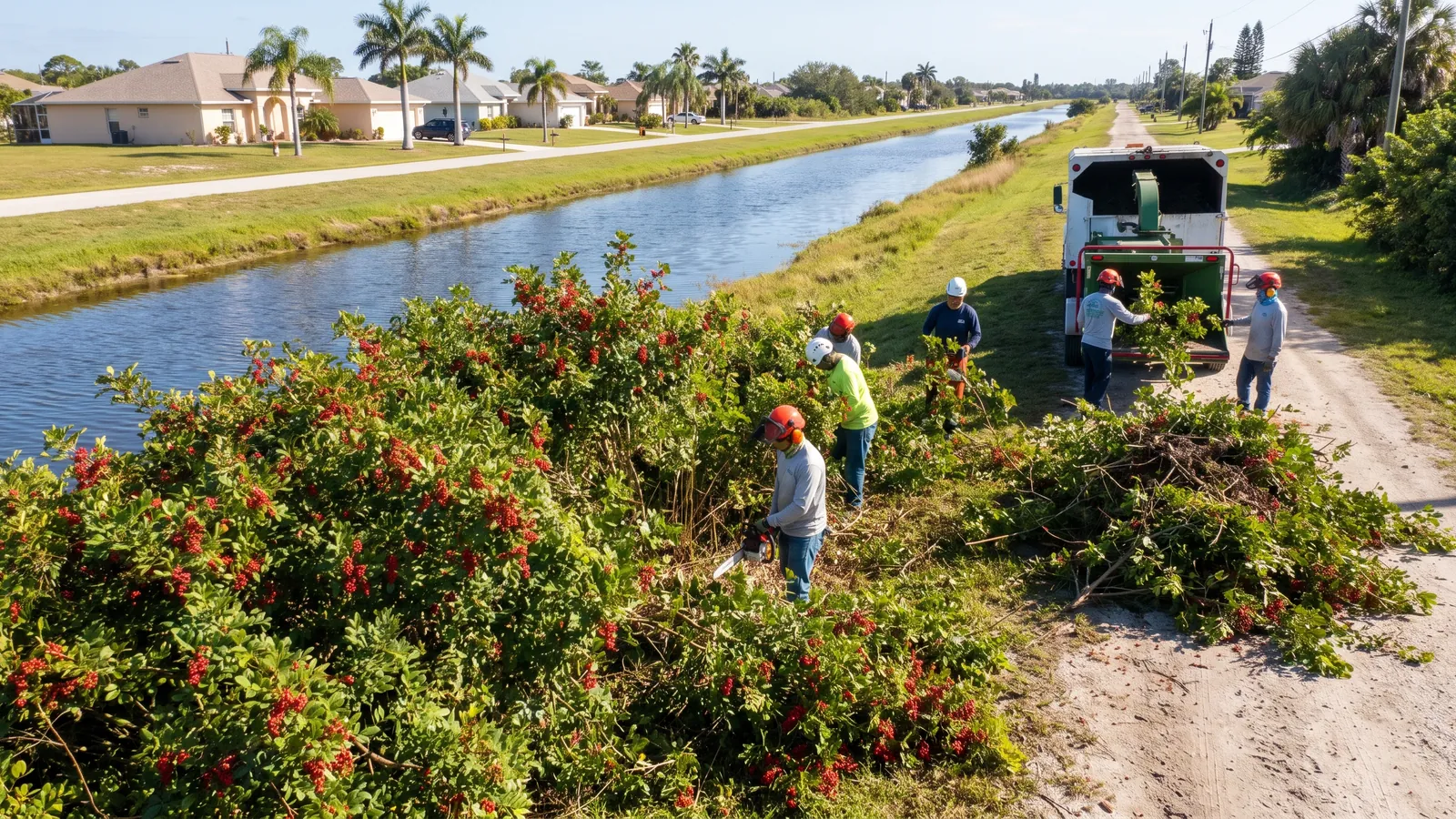
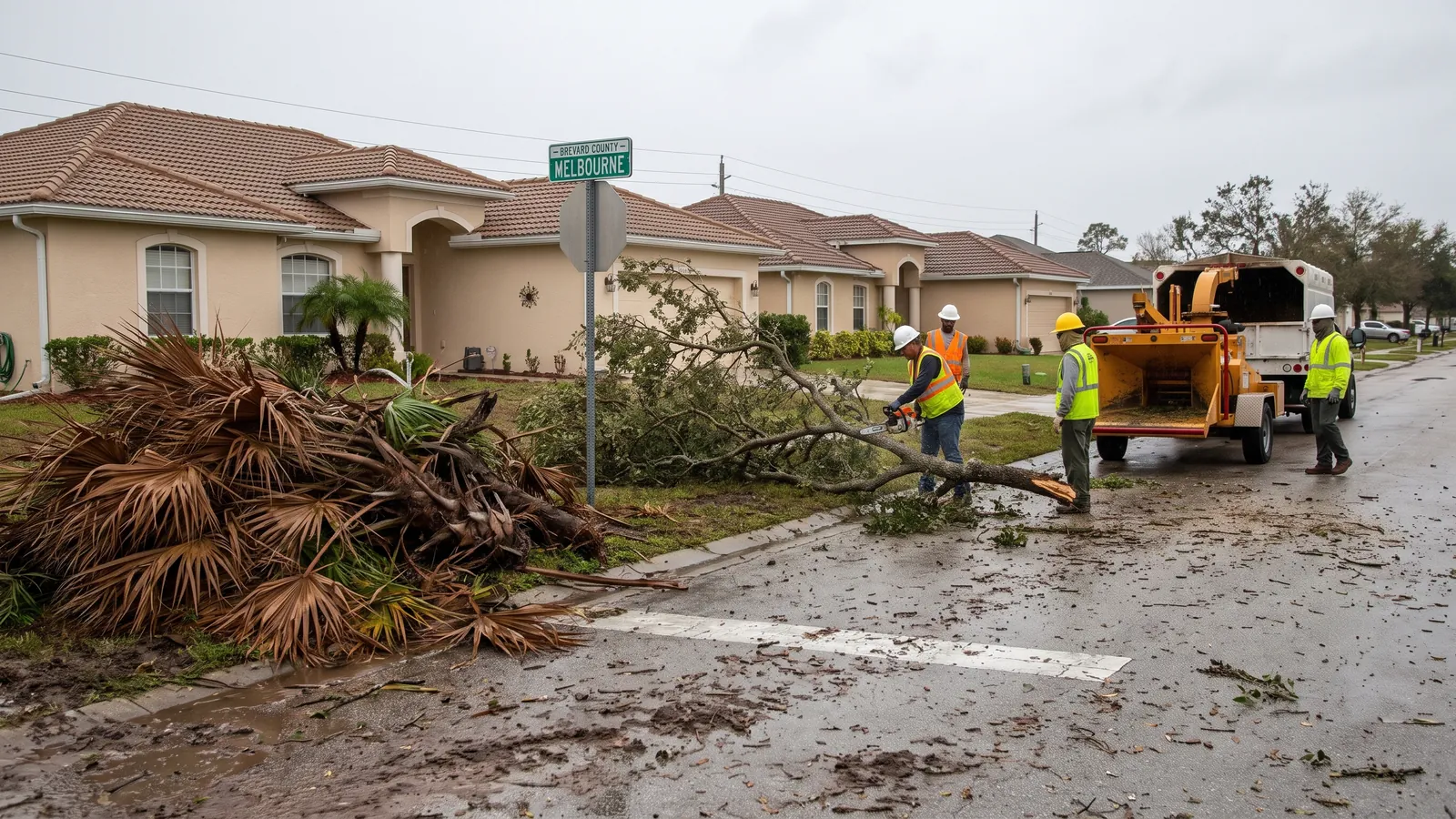
Brazilian pepper is the most widespread invasive plant in Florida and Palm Bay has more than its share: it lines the drainage canals, fills the vacant General Development lots, walls off the lot lines between neighbors and takes over any back corner nobody mowed for a few years. It's on Palm Bay's list of species that can be removed without any permit, along with Australian pine, melaleuca, camphor, chinaberry, eucalyptus and castor bean, and for good reason — it's shallow-rooted and brittle in wind, it shades out everything native, its berries feed the birds that spread it, its sap gives some people a rash like poison ivy (it's in the same family), and a thicket is a fire ladder and a mosquito nursery. Australian pines are worse in a storm: shallow-rooted 80-foot trees that came down by the hundred in Frances, Jeanne and Irma.
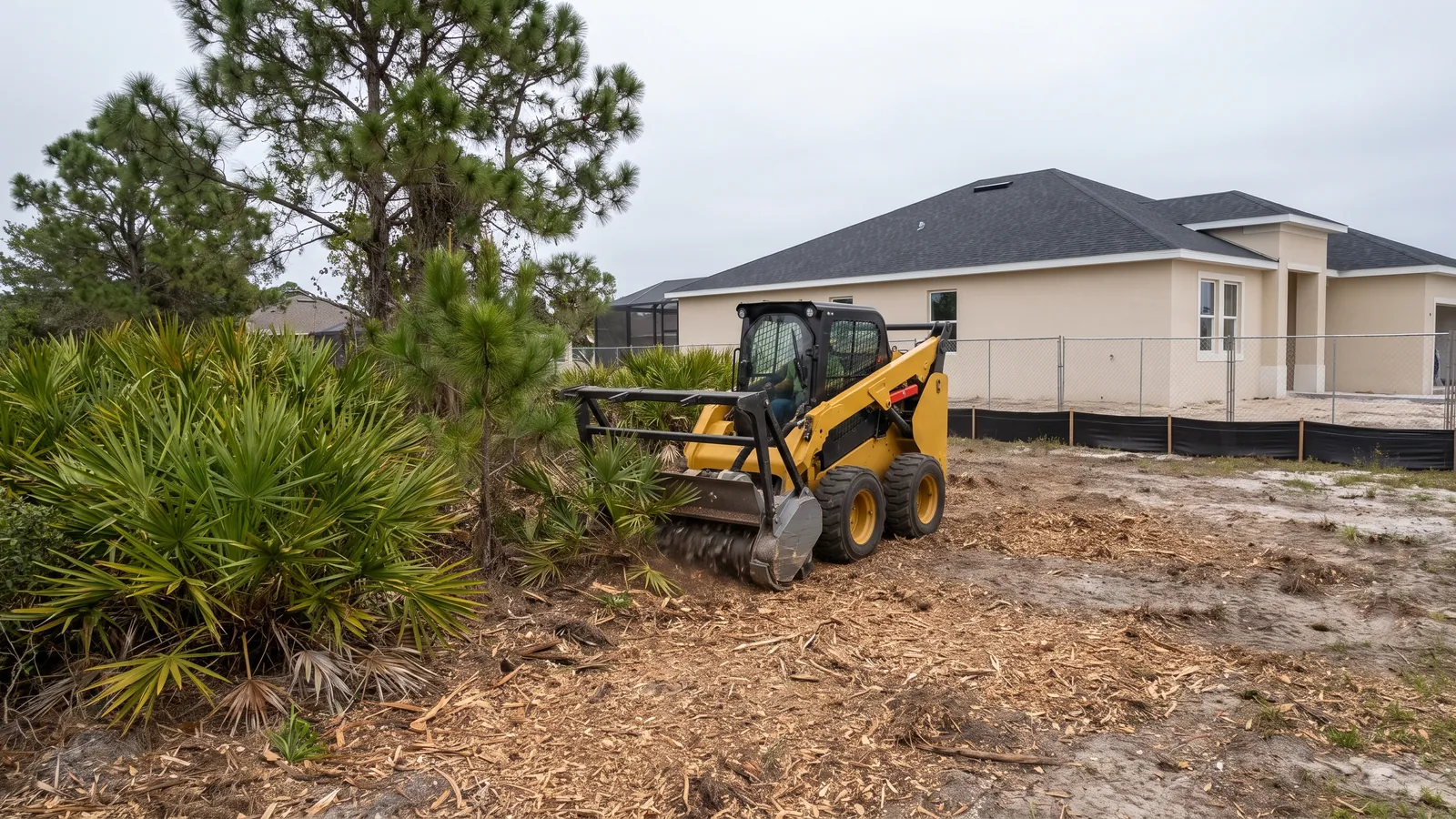
Removing pepper is easy; keeping it gone is the skill. Cut a pepper tree and leave the stump and it resprouts from the stump and the roots within weeks, thicker than before. The method that works is cut-stump treatment: cut it low, and within a few minutes — before the cut surface seals — paint the cambium ring with a triclopyr or glyphosate herbicide labeled for that use, so the root system dies instead of resprouting. We do that on every stump, we haul the brush (pepper doesn't chip well and the chips resprout too), and we come back once at no charge if anything sprouts. On canal banks we work from the top of the bank and leave the roots of the natives in place so the bank holds. Bigger jobs — a whole lot line, the back half of a Compound lot — are done with a mulching head and the stumps treated after.
What's included
Cut-stump treatment
Every stump painted with a labeled herbicide within minutes of the cut, so the roots die instead of resprouting. The step that makes it permanent.
Canal banks
Pepper cleared from the top of the bank down without stripping the roots that hold the bank; natives left where they exist.
Lot lines and back corners
Thickets between you and the neighbor cut back to the line and hauled; the neighbor's side by agreement.
Australian pine & melaleuca
The big shallow-rooted invasives taken down before a storm does it, stumps ground or treated.
Hauled, not chipped
Pepper brush hauled off the lot — chips resprout and the sap irritates skin. Gloves and sleeves on every crew member.
Follow-up visit
One return at no charge within the year to treat any regrowth. No permit needed for any invasive on the city's list.
Brazilian pepper & invasive removal cost in Palm Bay, FL
| Job | Typical price | Notes |
|---|---|---|
| Small pepper clump (2–3 trees), cut, treated, hauled | $250 – $500 | |
| Lot-line thicket, 50–100 ft long | $700 – $1,800 | Cut and treated |
| Canal-bank clearing, typical lot frontage | $600 – $1,500 | Roots left, bank protected |
| Back-yard or vacant-lot thicket (per 1,000 sq ft) | $450 – $900 | Mulched, stumps treated |
| Australian pine removal, 50–80 ft | $700 – $2,200 | Per tree |
| Melaleuca or camphor removal | $400 – $1,200 | Per tree, stump treated |
These are 2026 Brevard County ranges so you can budget. Your written price is itemized — the climb or bucket work, rigging, crane if needed, chipping and haul-off, stump grinding — and good for 30 days.
Recent work
Questions we get about brazilian pepper & invasive removal
Do I need a permit to remove Brazilian pepper in Palm Bay?
No. Brazilian pepper, Australian pine, melaleuca, camphor, chinaberry, eucalyptus and castor bean are exempt from Palm Bay's tree-removal permit everywhere in the city, and Brevard County and the other cities treat pepper the same way. Cut as much as you like.
Why does my pepper keep coming back?
Because it was cut and not treated. Pepper resprouts from the stump and from the roots, and cutting it just prunes it. The stump has to be painted with the right herbicide within minutes of the cut, before the surface seals. We do that on every cut; that's the difference.
Is Brazilian pepper poisonous?
Its sap and crushed leaves cause a rash in a lot of people — it's related to poison ivy — and the berries make birds and some people sick. It's why we haul it instead of chipping it, and why we don't recommend clearing a thicket yourself in shorts.
Can you clear the pepper along my canal without hurting the bank?
Yes. We cut from the top of the bank, leave the root systems in the ground so the bank holds, treat the stumps, and leave any native vegetation. Stripping a canal bank bare is how it ends up in the canal.
Does pepper removal help in a hurricane?
A lot. Pepper is shallow-rooted and brittle, and Australian pines are the trees that came down by the hundred in 2004 and 2017. A cleared lot line is one less thing to land on the fence, the cage or the house.