Land clearing in Palm Bay, from a quarter-acre lot to acreage
The southwest quadrant is being built out on lots that were pine flatwoods two years ago. We clear them — mulched, grubbed or selectively — with the trees you're keeping protected and the city's rules on what stays followed.
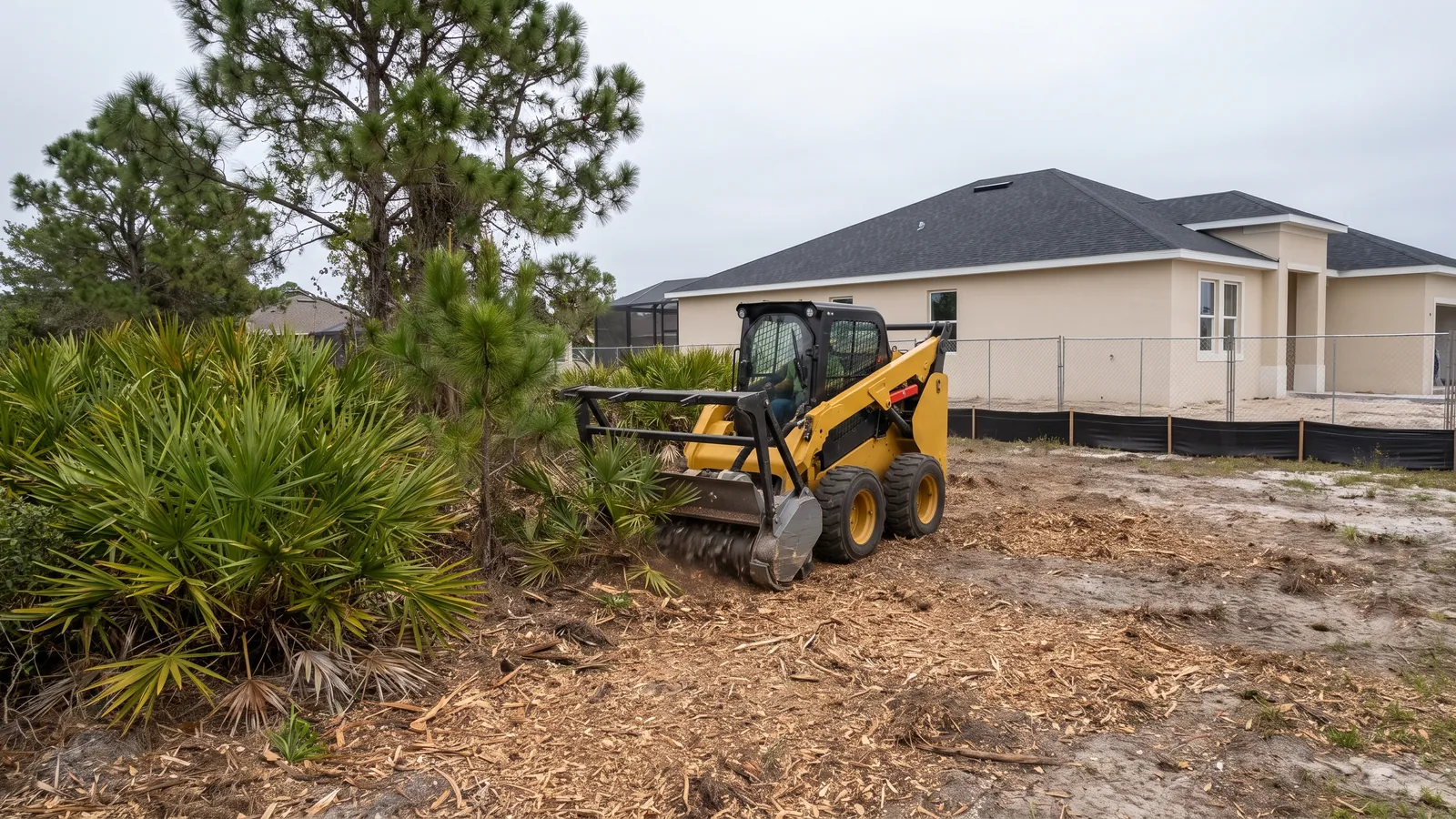
Palm Bay is still being built. General Development platted the city in 1959 with tens of thousands of quarter-acre lots, and the southwest quadrant — the Compound, Cypress Bay, the streets off Jupiter Boulevard, San Filippo and the St. Johns Heritage Parkway — is filling in fast on lots that have been pine flatwoods, saw palmetto and Brazilian pepper since the plat was drawn. Clearing one is the first step of every build, and it comes in three versions: a full clear-and-grub for a slab-on-grade house, where everything comes out roots and all; a forestry-mulch clear, where a mulching head grinds the scrub and small trees in place and leaves a clean, walkable lot without haul-off; and a selective clear, where the good live oaks and the big slash pines stay and everything else goes.
The rules matter more than people expect. Palm Bay's landscape code requires new residential lots to keep or plant a minimum number of trees, with a share of them native, so a lot cleared to bare sand costs you trees at the end; lots over an acre need a tree-removal permit from the Planning Division with a site plan of what's coming out; and the invasive species on the city's list — pepper, Australian pine, melaleuca — can go anywhere without a permit, which is most of what's on a Compound lot anyway. The soil is flatwoods sand over hardpan with a water table that's near the surface in the wet season, so the drainage swales along the street stay open and the spoil doesn't fill them. We clear, mulch or grub to the builder's plan, protect the keepers with fencing at the drip line, and leave the lot ready for the survey stakes.
What's included
Clear and grub
Everything out, roots and all, for a slab-on-grade build; stumps removed, holes filled, lot rough-graded.
Forestry mulching
A mulching head grinds scrub, palmetto and small trees in place — fast, no haul-off, no burn, and a clean lot.
Selective clearing
The live oaks and big pines you're keeping fenced at the drip line, everything else removed around them.
Pepper and palmetto
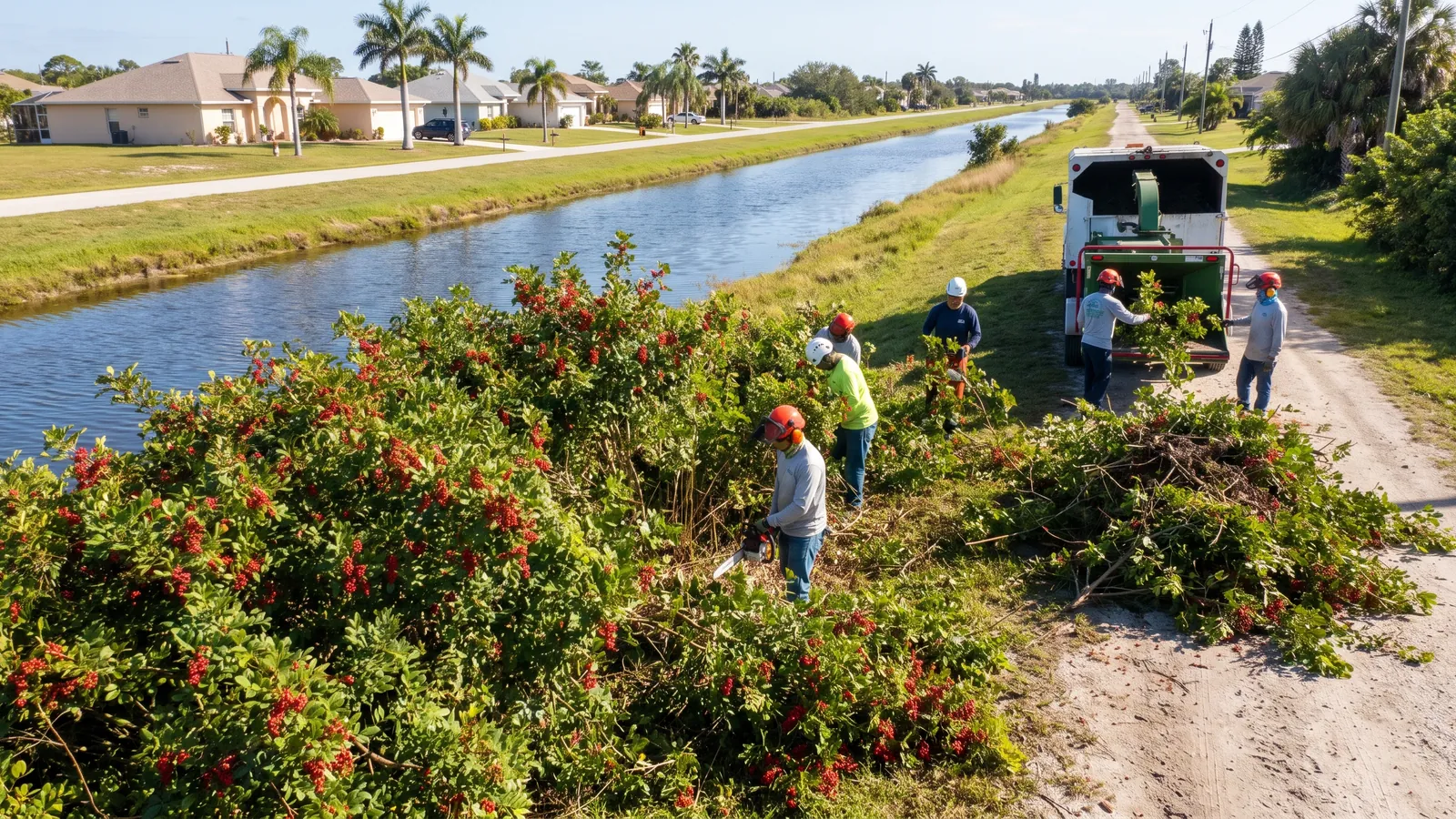
Brazilian pepper and Australian pine cut and stump-treated; saw palmetto grubbed so it doesn't come back through the sod.
Permits and retention
Palm Bay's tree-retention and permit rules handled — a site plan for lots over an acre, keepers counted so you're not planting six trees at the end.
Swales protected
Spoil kept out of the street swale and the neighbor's lot; drainage the way the city wants it.
Lot & land clearing cost in Palm Bay, FL
| Job | Typical price | Notes |
|---|---|---|
| Quarter-acre lot, forestry mulch clear | $2,000 – $3,800 | Scrub, palmetto, small trees |
| Quarter-acre lot, clear and grub with haul-off | $3,500 – $7,000 | Stumps out, rough grade |
| Selective clear, keepers protected (quarter-acre) | $2,500 – $5,500 | Depends on what stays |
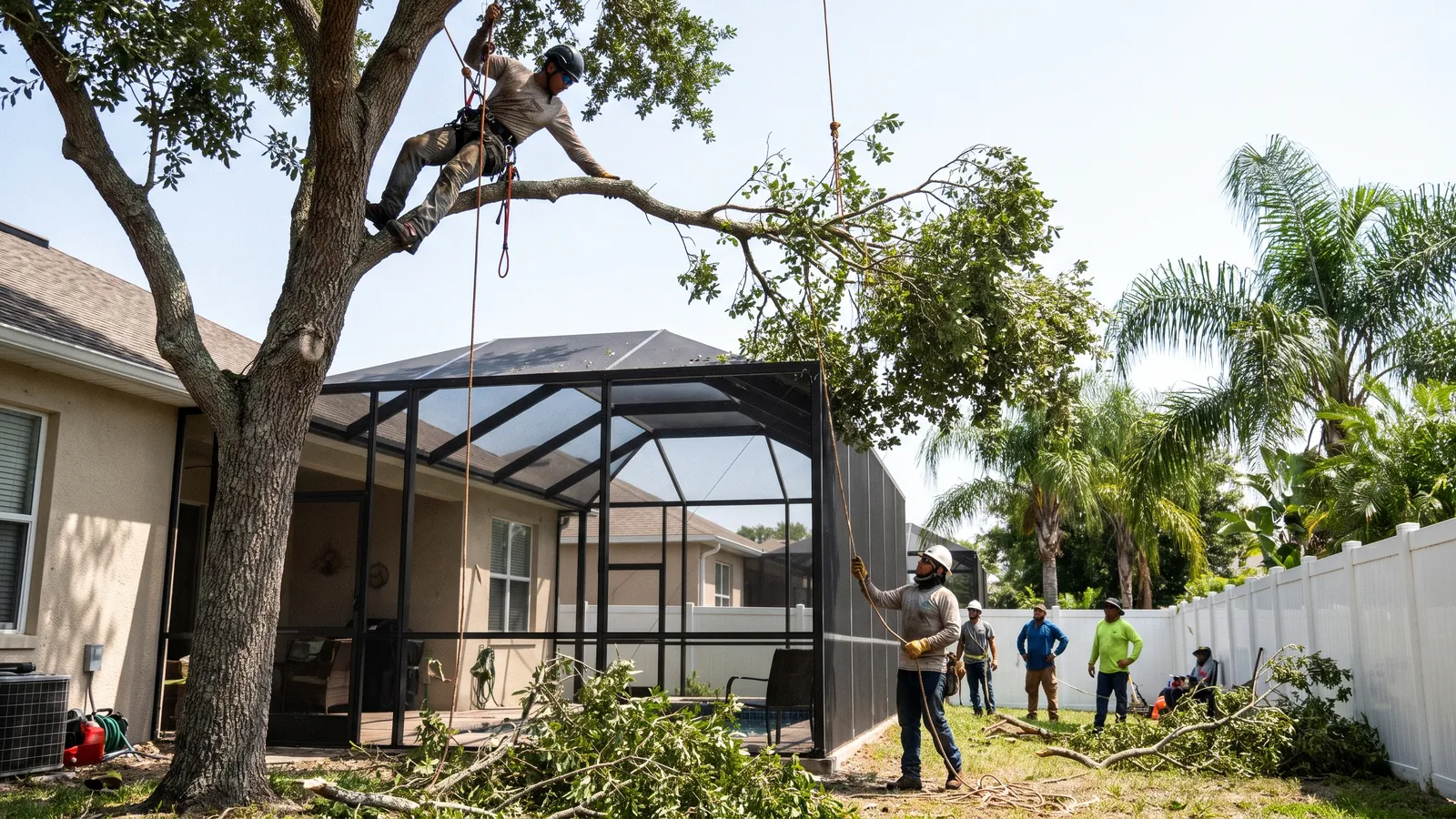
| Large trees removed during clearing (each) | $400 – $1,500 | Pines and oaks |
| Acreage, forestry mulching (per acre) | $2,500 – $5,000 | Density dependent |
| Brazilian pepper thicket clearing (per 1,000 sq ft) | $450 – $900 | Stumps treated |
These are 2026 Brevard County ranges so you can budget. Your written price is itemized — the climb or bucket work, rigging, crane if needed, chipping and haul-off, stump grinding — and good for 30 days.
Recent work
Questions we get about lot & land clearing
Do I need a permit to clear a lot in Palm Bay?
A single-family lot under an acre is exempt from the city's tree-removal permit, but the building permit for the house includes the landscape requirements — a minimum number of trees kept or planted, a share of them native — so it pays to keep the good ones. Lots over an acre need a tree-removal permit from the Planning Division with a site plan. Invasives can come out anywhere without a permit.
Mulching or grubbing — which do I need?
Grubbing if you're building on it soon: the stumps and roots have to be out from under the slab and the driveway. Mulching if you want a clean lot to hold, sell or fence — it's faster and cheaper, leaves a layer of mulch that keeps the pepper from coming straight back, and can be grubbed later where the house goes.
Can you save the big oaks?
Yes, and you should — a mature live oak is worth more than anything you'll plant. We fence keepers at the drip line so the machines don't compact the roots, clear around them by hand where needed, and the arborist tells you which trees are worth saving and which pines are going to die once their roots are disturbed anyway.
What about the water on the lot?
Most southwest Palm Bay lots hold water in the wet season — flatwoods sand over hardpan. We keep the street swale open and the spoil off it, and we tell you where the low spot is so the builder's fill plan accounts for it.
How long does a lot take?
A quarter-acre mulch clear is a day. A clear-and-grub with haul-off is two to three days depending on how many trees and how far the debris goes. Acreage is priced by the acre after we walk it.