Tree removal in Palm Bay, rigged down over what matters
A 50-year-old laurel oak over the roof, a root-cut slash pine leaning at the pool cage, a queen palm gone bronze — taken down in pieces where it has to be, dropped whole where it can be, hauled and ground, for a written price after an arborist has actually looked at it.
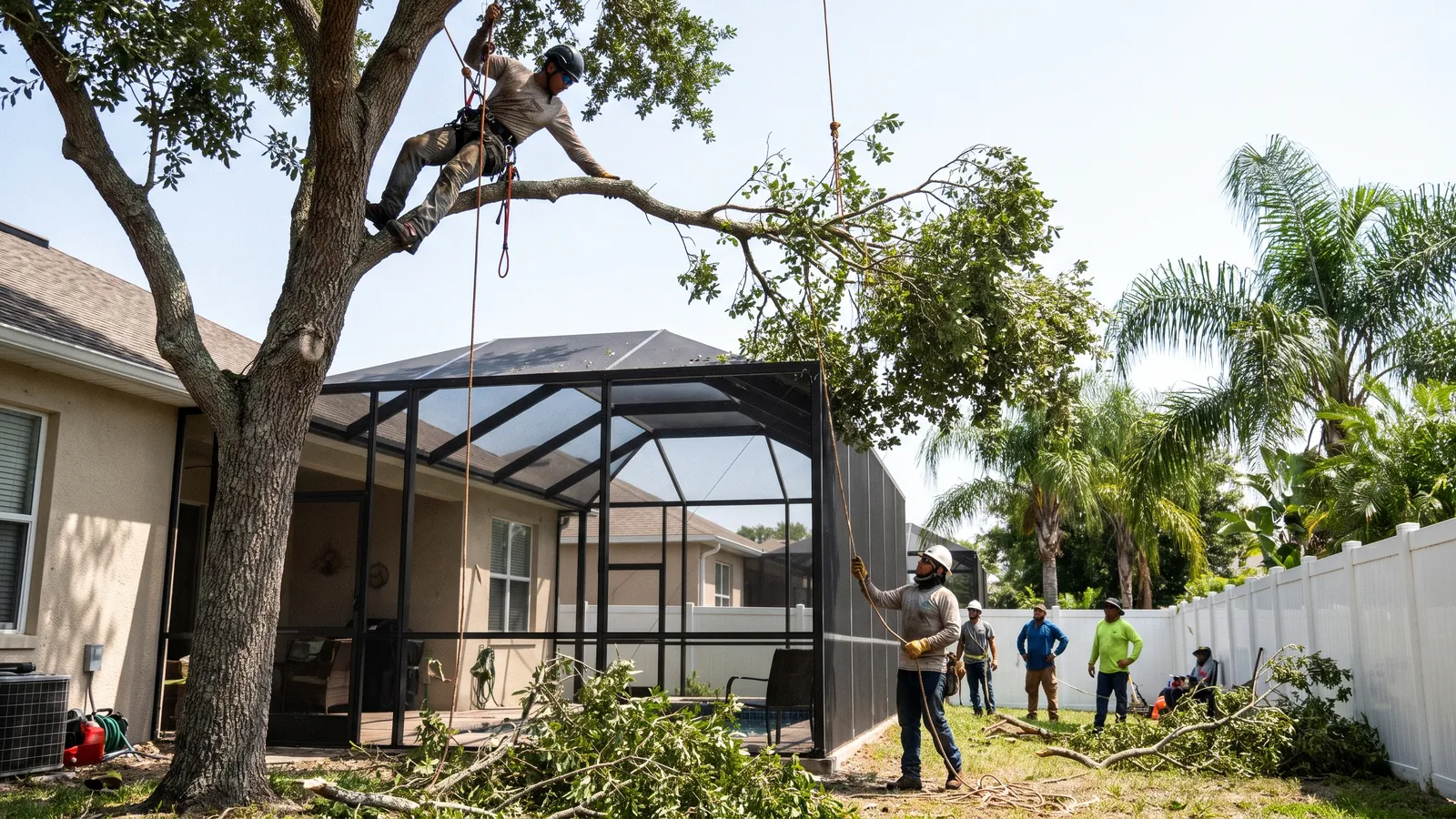
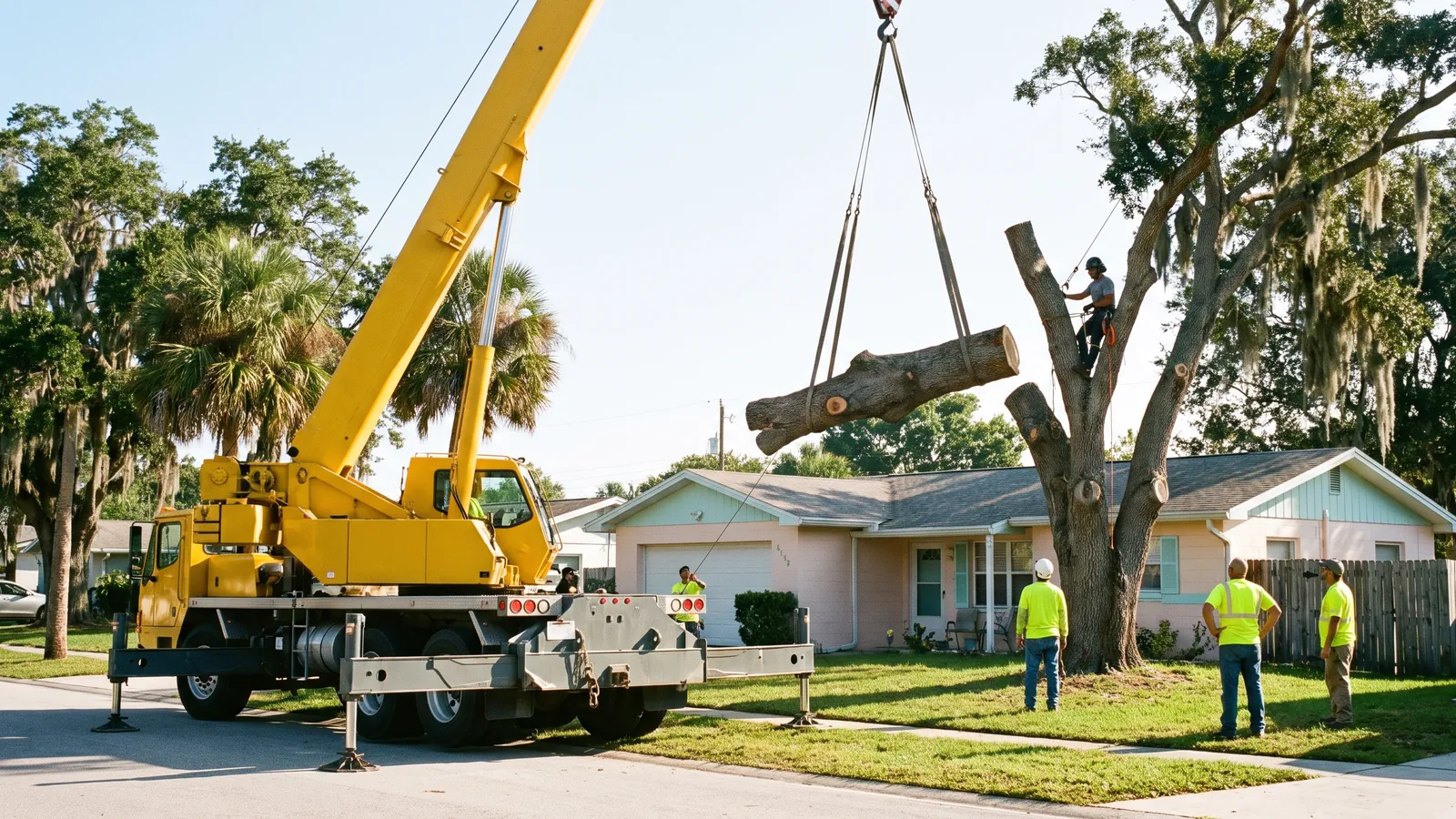
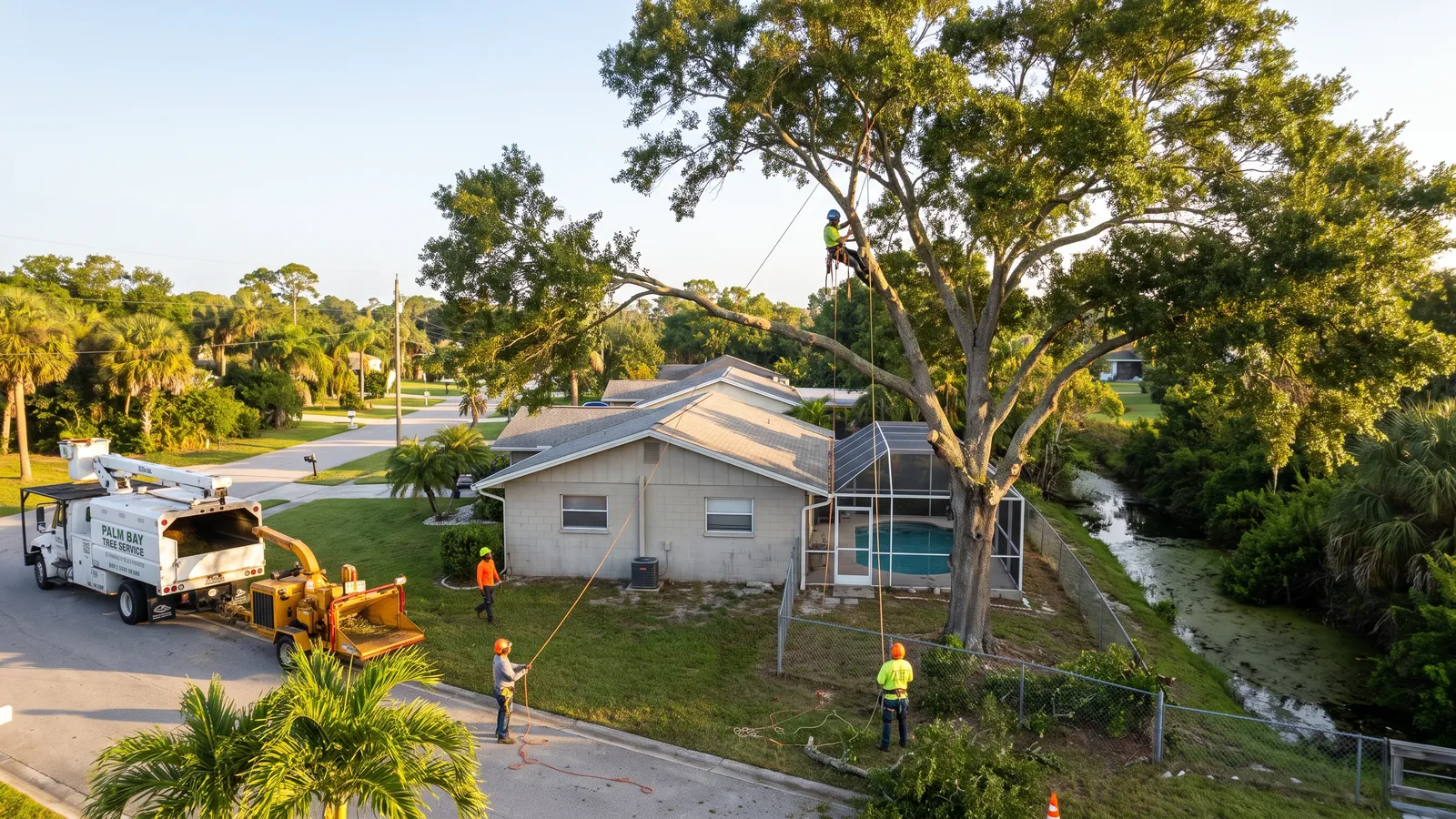
Most tree removals in Palm Bay happen on a quarter-acre General Development lot with a house on it, a screened pool cage behind it, a fence on either side and a drainage canal or a neighbor's lanai in back. There is rarely room to drop a tree whole. So the job is rigging: a climber or a bucket, a rope and a lowering device, and the tree coming down in sections small enough to control — limbs roped over the cage and set down on the lawn, the trunk chunked from the top, the last ten feet felled onto plywood so the driveway survives. When the tree is too big, too hollow or too close to rig safely, it's a crane. When there's open ground, we notch it, fell it, and save you the rigging cost.
What comes down here is a short list. Laurel oaks from the first wave of building in the '70s and '80s, hollow at the base by 50 and dropping limbs; slash and sand pines that were root-cut by the driveway, the pool or the septic drainfield and died from the top; queen and sabal palms killed by lethal bronzing; Washingtonias that have leaned or grown into the wires; and the Brazilian pepper that swallowed the canal bank. Before any of it comes down, our ISA Certified Arborist looks at the tree and tells you honestly whether it needs to — a lot of leaning live oaks and thin-looking pines are fine — and whether Palm Bay, Melbourne or the beach town you're in wants a permit or a 163.045 letter first.
What's included
Arborist looks first
An ISA Certified Arborist reads the lean, the root flare, decay and what the tree would hit — and tells you when it doesn't need to come down.
Rigged, not dropped
Limbs and trunk sections roped down over the house, the pool cage, the fence and the seawall; felled whole only where there's clear ground.
Permit & 163.045 check
Palm Bay exempts house lots under an acre and every invasive; Melbourne and the beach towns don't always. We check, and write the hazard letter when the tree earns it.
Wires & utilities
FPL called for line drops or clearance where the tree is in the primaries; we stay out of the lines we're not allowed in.
Chipped and hauled
Brush chipped on site, wood hauled unless you want it cut to firewood length and left, lawn raked, plywood down where the truck rolls.
Stump ground if you want
Priced separately; ground 8–12 inches below grade and backfilled the same day or a few days later.
Tree removal cost in Palm Bay, FL
| Job | Typical price | Notes |
|---|---|---|
| Queen palm, Washingtonia or small pine (under 30 ft, open yard) | $350 – $750 | Felled whole, chipped |
| Medium oak or pine, 30–50 ft, rigged near the house or cage | $900 – $2,000 | Climber or bucket, roped down |
| Large laurel or live oak, 50–70 ft, over the house or a canal | $2,000 – $3,800 | Full rigging; crane if it's hollow |
| Crane-assisted removal (added) | +$1,200 – $2,800 | See crane tree removal |
| Dead or hazardous pine, 60 ft+, leaning at a structure | $1,500 – $3,200 | Climbed carefully or craned |
| Stump grinding (added) | $120 – $450 | By diameter |
| Emergency removal off a structure (any hour) | $900 – $4,500 | Documented for insurance |
These are 2026 Brevard County ranges so you can budget. Your written price is itemized — the climb or bucket work, rigging, crane if needed, chipping and haul-off, stump grinding — and good for 30 days.
Recent work
Questions we get about tree removal
Do I need a permit to remove a tree in Palm Bay?
On a single- or two-family lot under an acre, generally no — and the invasive species on the city's list (Brazilian pepper, Australian pine, melaleuca, camphor, chinaberry, eucalyptus, castor bean) are exempt everywhere. Lots over an acre, commercial parcels and planned developments apply to the Planning Division, which reviews in about seven business days and can grant verbal approval for an imminent hazard with written confirmation to follow. Melbourne, Satellite Beach and the other beach towns have their own ordinances and some require a permit on a house lot; we confirm before we cut. Statewide, F.S. 163.045 removes the local permit requirement when an ISA Certified Arborist documents an unacceptable risk.
How do you know if my oak is really dangerous?
The arborist looks at the things that matter: conks or cavities at the base, a lean that's changed, soil heaving on the tension side, dead wood in the crown, cracks at the unions, and — for laurel oaks especially — how old it is, because they hollow from the inside after about 50 years. A live oak with a lean it's had for decades is usually fine. A laurel oak with a mushroom at the base is not, no matter how green the top is.
Can you take a tree down between my pool cage and the neighbor's?
Yes. That's most of our work. The climber pieces the tree down from the top, every limb is roped to a lowering device and set on the lawn, and the trunk comes down in chunks. It's slower than felling and it costs more, and it's the only way to do it without a claim.
What happens to the wood?
Brush is chipped into our truck. Trunk wood is hauled unless you want it — we'll cut it to firewood length and stack it where you say, which takes a little off the price. Oak makes good firewood here; pine doesn't.
How fast can you get here?
Same day for a tree on a structure or across a driveway, any hour of the night. Non-urgent removals are usually within a week, longer in the two weeks after a named storm when the whole county is calling.