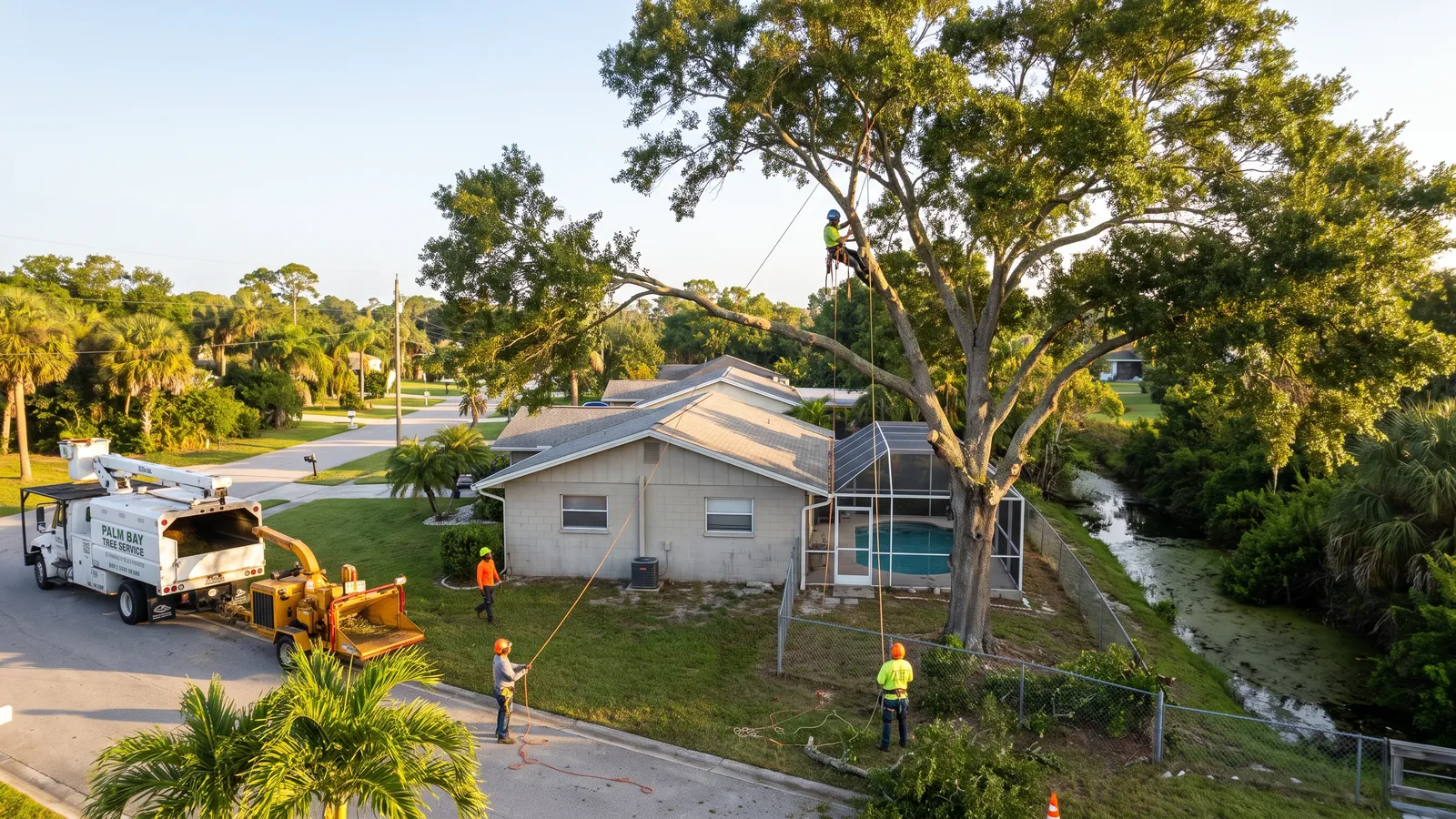
Space Coast tree work, done by people who know which oak is about to fall.
Tree removal, crane work, trimming, palm care, stump grinding, Brazilian pepper clearing and 24/7 storm cleanup across Palm Bay and Brevard County — with an ISA Certified Arborist on staff, insurance you can actually see, and a written price before a saw starts.
ISA Certified Arborist on staff · Insured for tree work (general liability + workers' comp) · Free on-site estimates · 24/7 storm response
A tree company built for Palm Bay's canal lots, quarter-acres and 50-year-old oaks
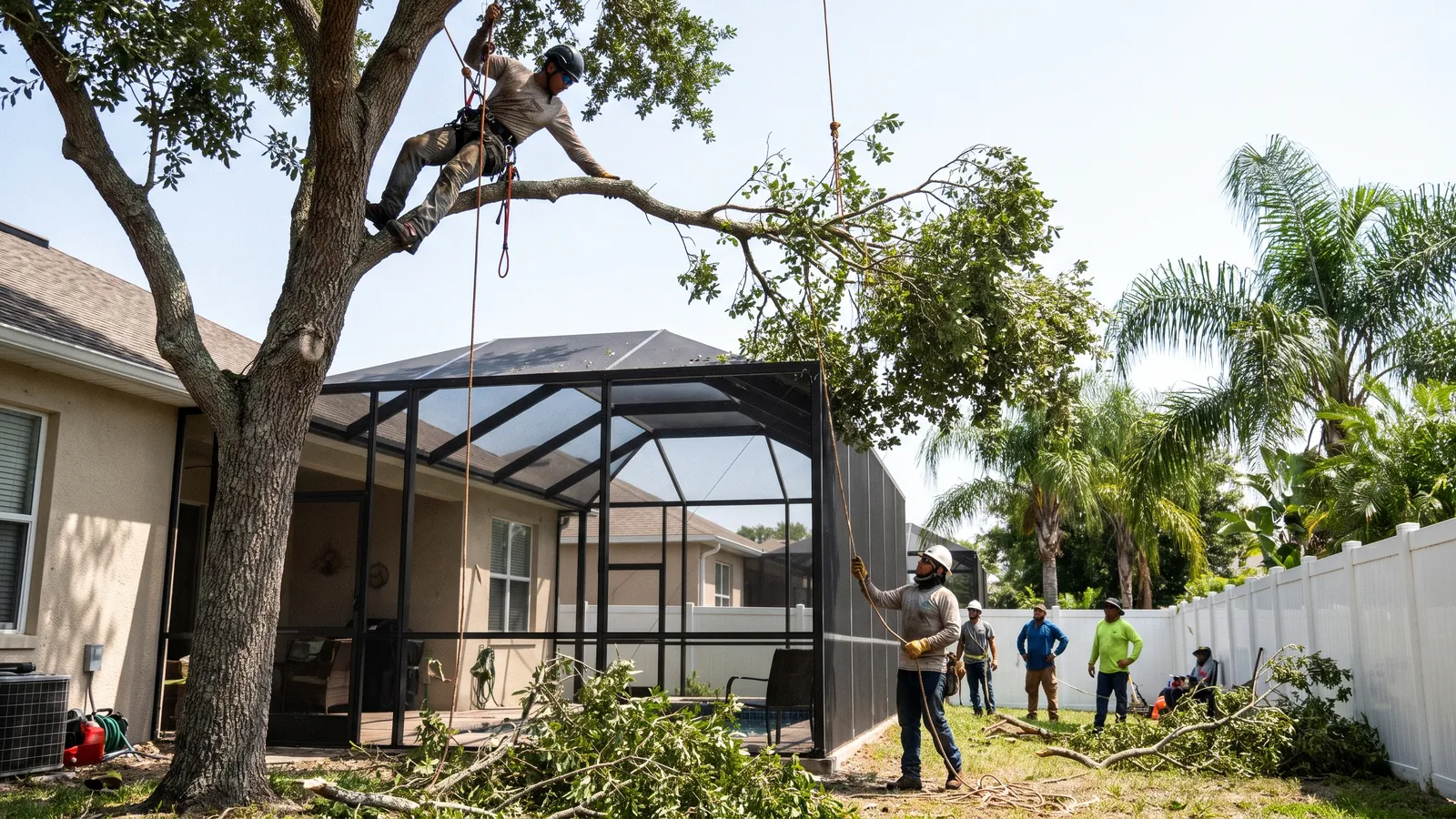
Tree removal
Dead, dying, leaning and in-the-way trees taken down safely — climbed and rigged piece by piece near the house, the pool cage and the canal.
Removal & pricing →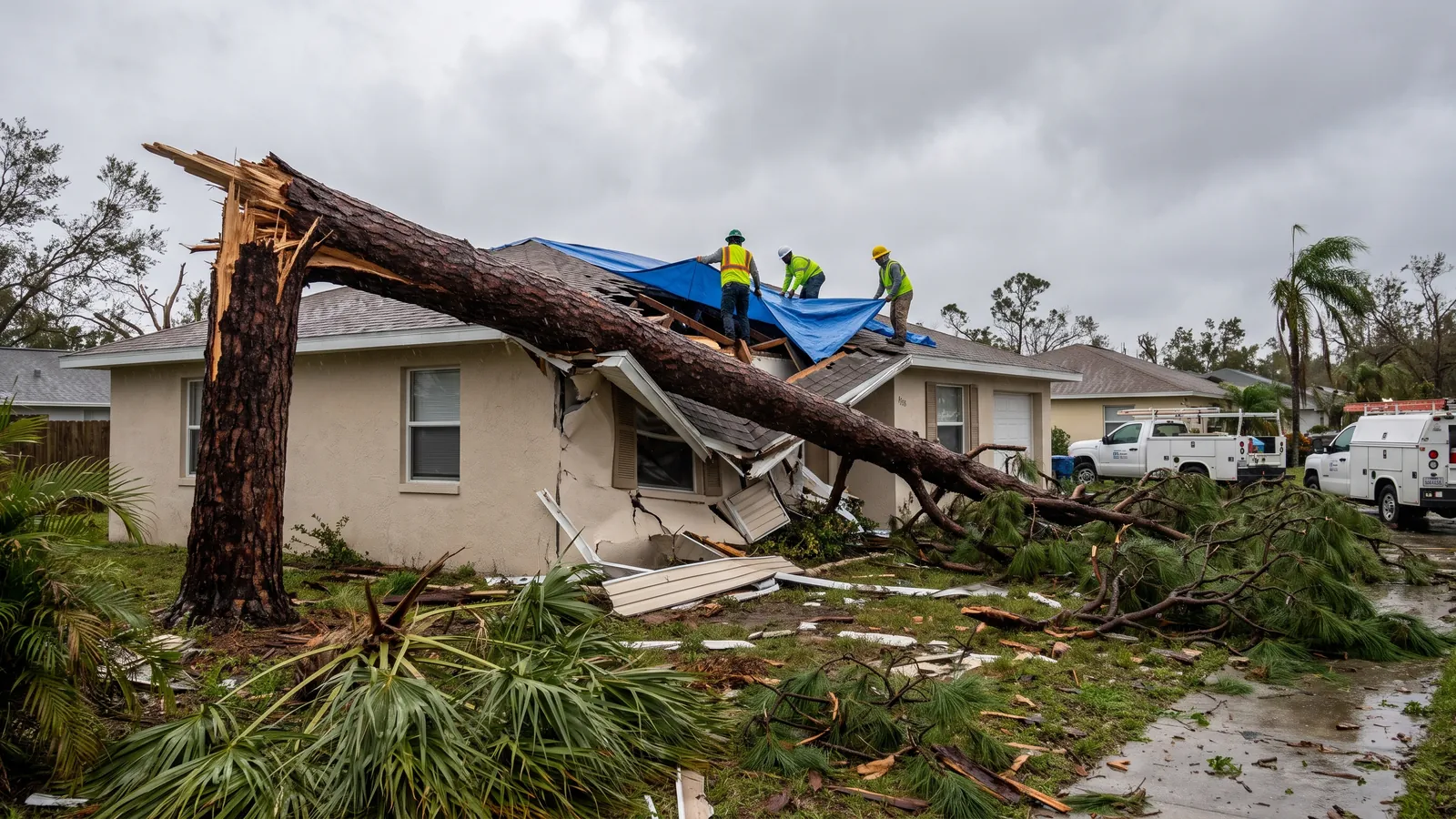
24/7 emergency & storm service
Trees on roofs and lanais, hanging limbs, blocked driveways — any hour, with the photos and paperwork for your claim.
Emergency service →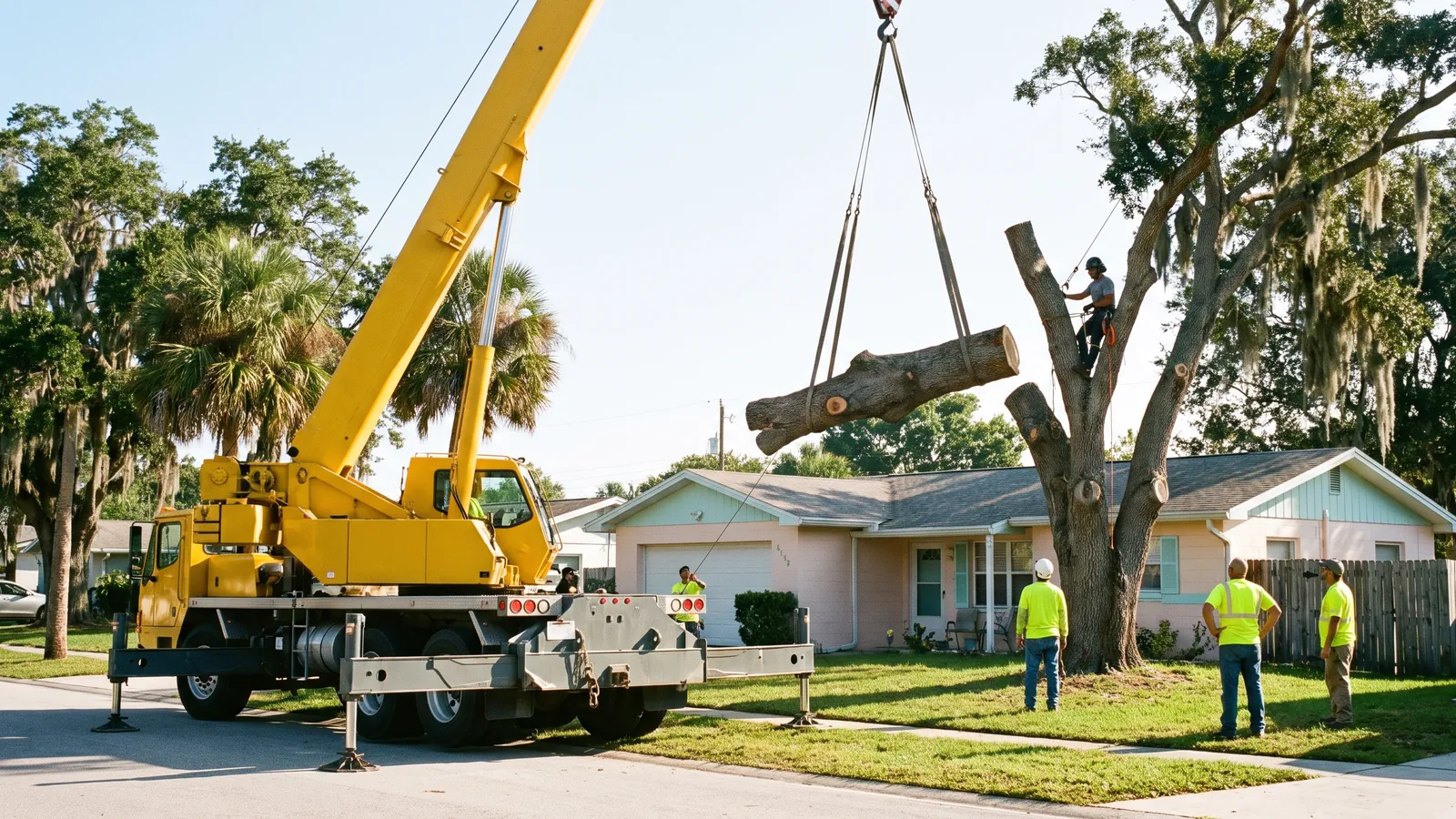
Crane tree removal
The big oak over the house, the pine between two pool cages, the tree the crew can't rig safely — picked out in sections and set on the street.
Crane work →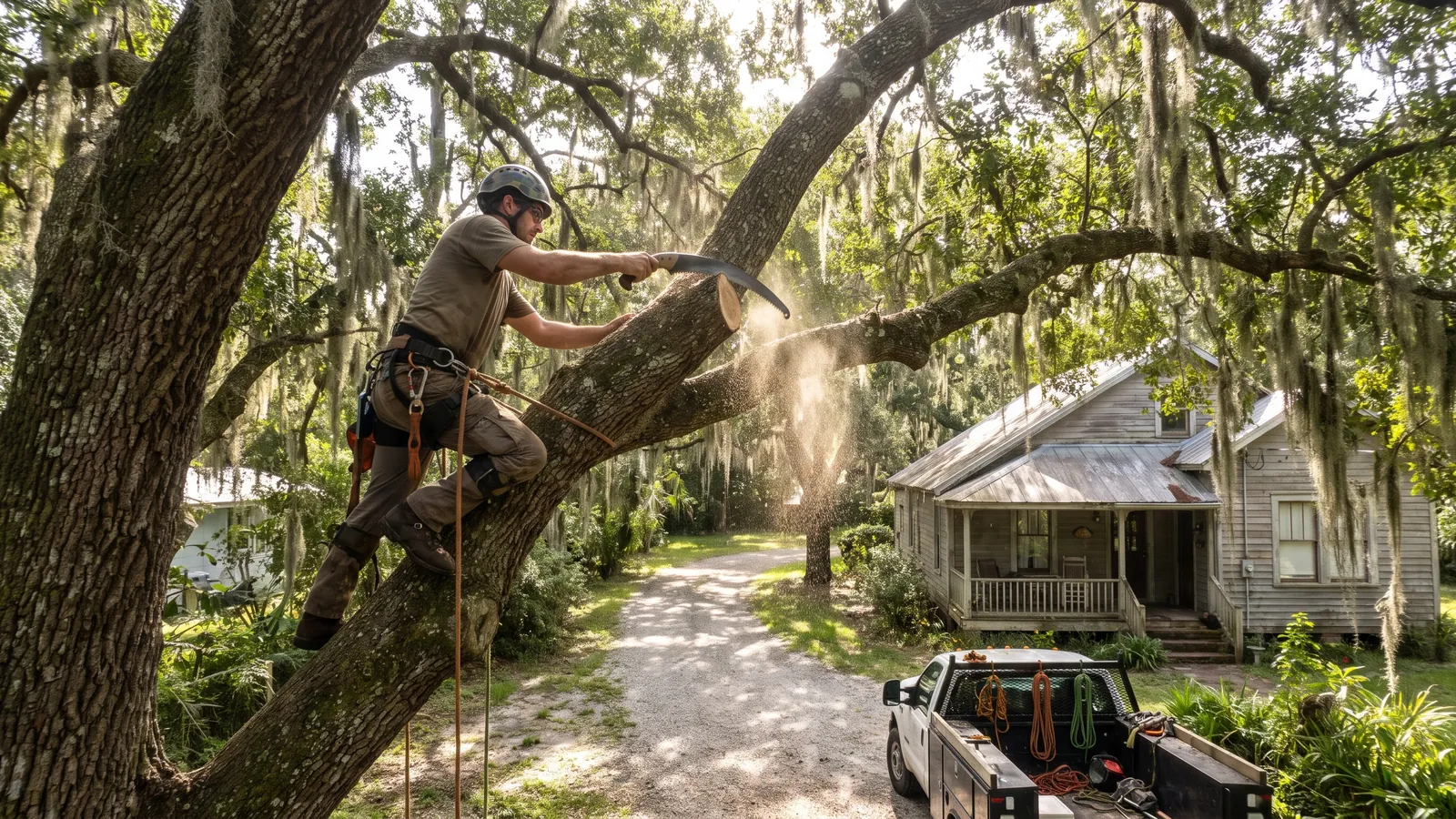
Tree trimming & pruning
Canopy lifting, deadwooding, structural pruning and clearance from roofs, wires and driveways — cut where the tree can seal, never topped.
Trimming →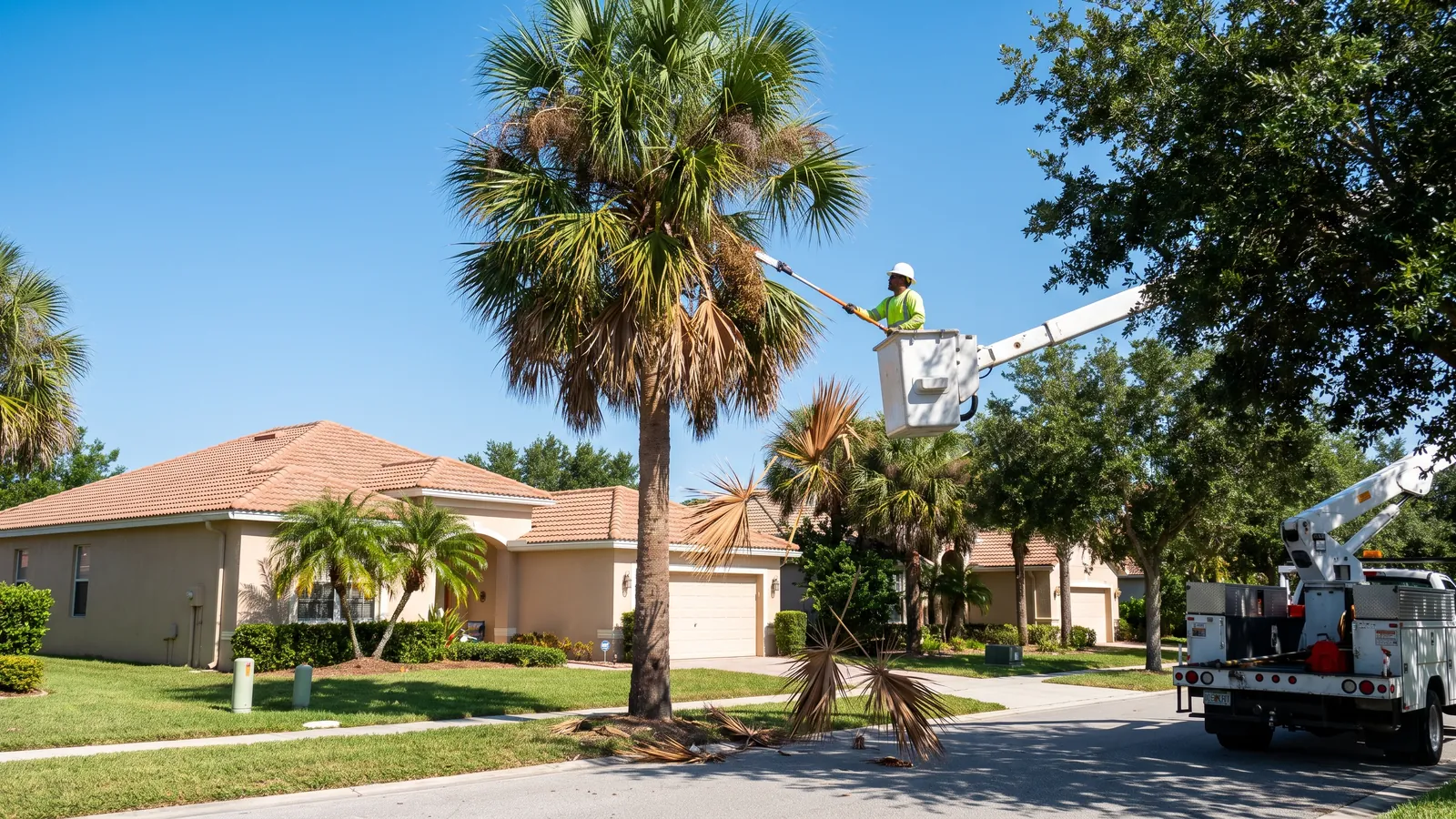
Palm trimming
Sabal, queen, royal, Washingtonia and coconut palms cleaned of dead fronds, pods and boots to the University of Florida standard, not hurricane-cut.
Palm care →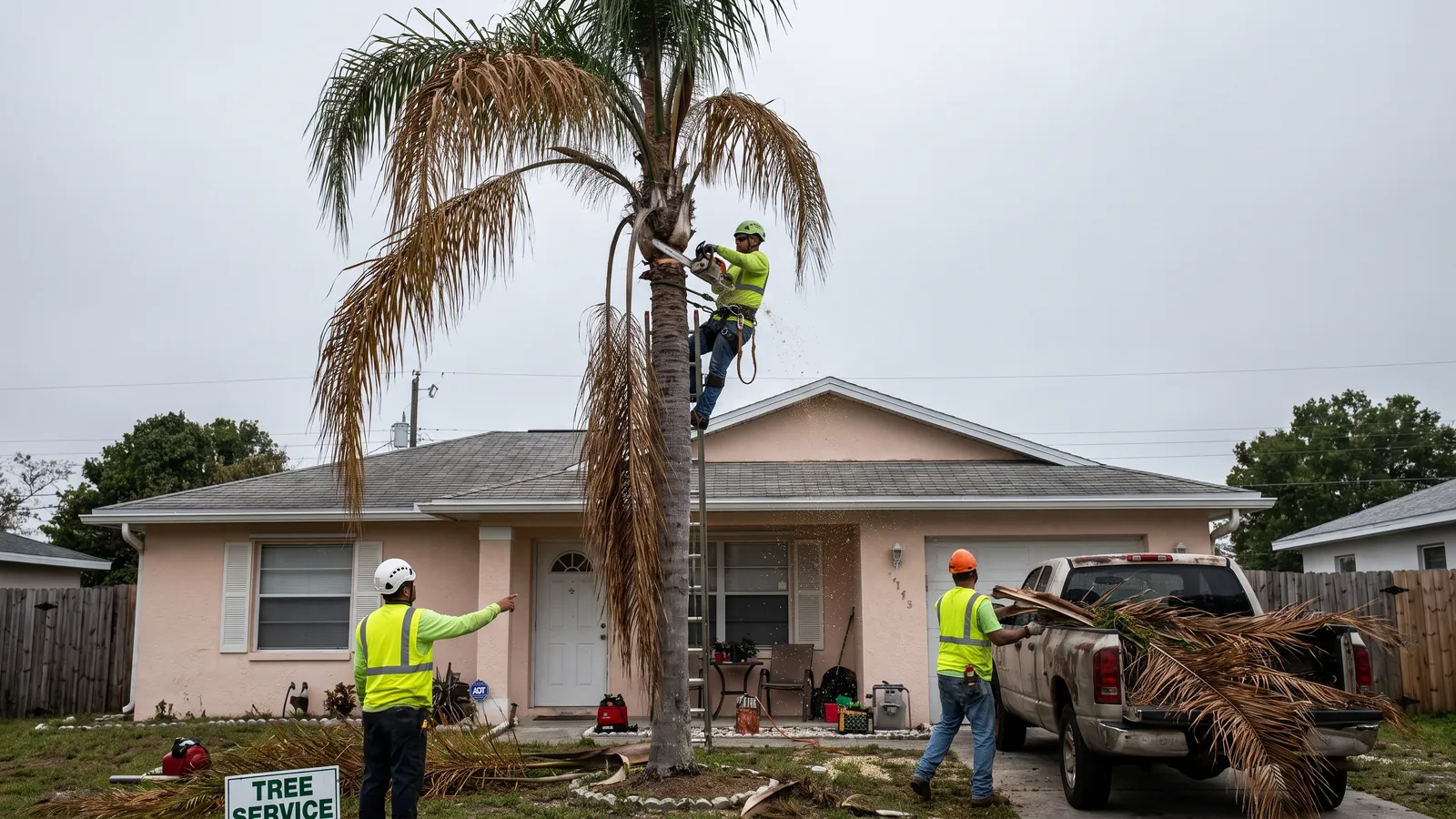
Palm removal
Lethal-bronzing casualties, leaning Washingtonias, queen palms in the wrong place — removed, stump ground, hauled.
Palm removal →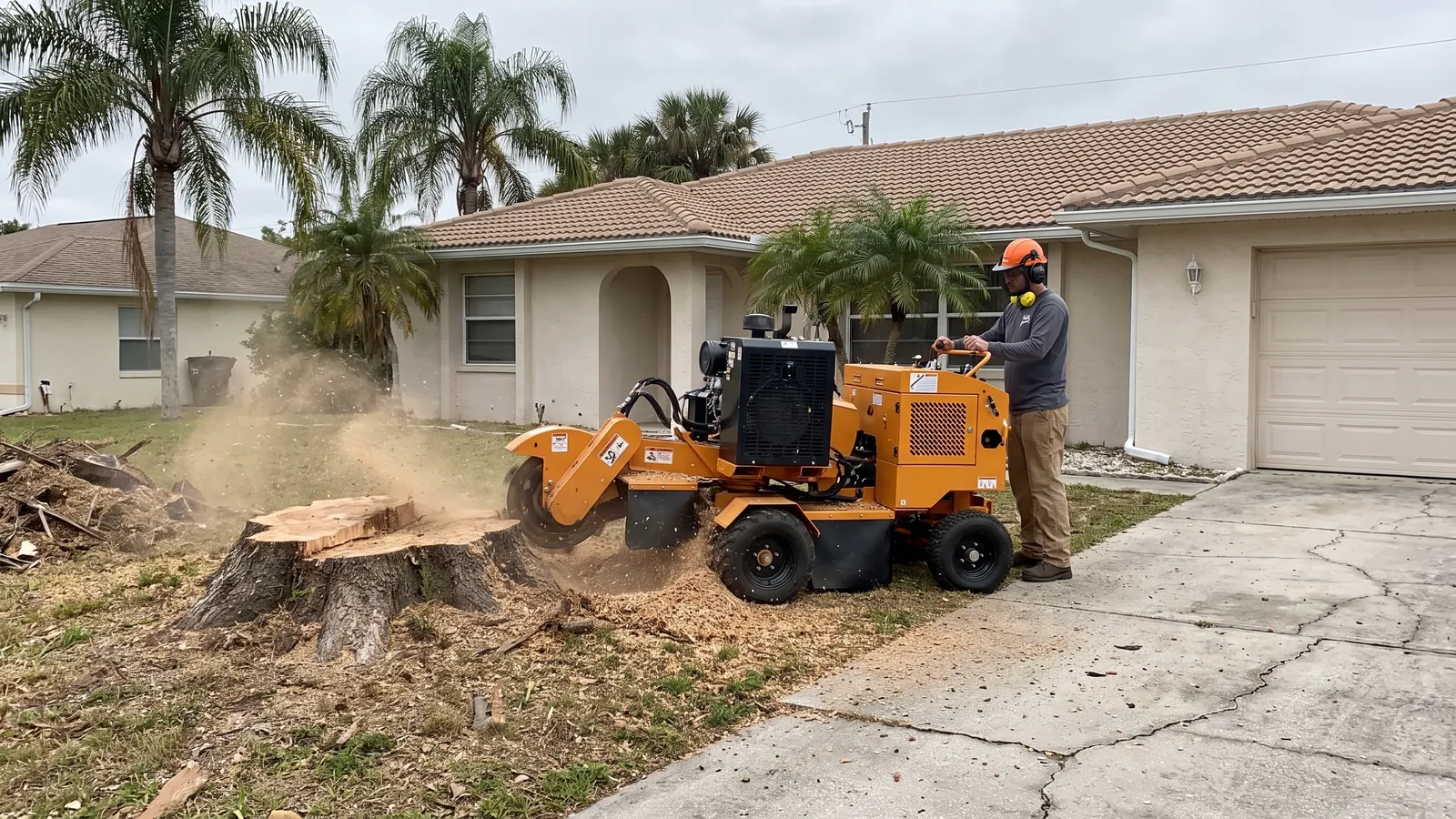
Stump grinding
Ground 8–12 inches below grade, surface roots chased, chips raked and the hole backfilled so you can sod or plant.
Stump grinding →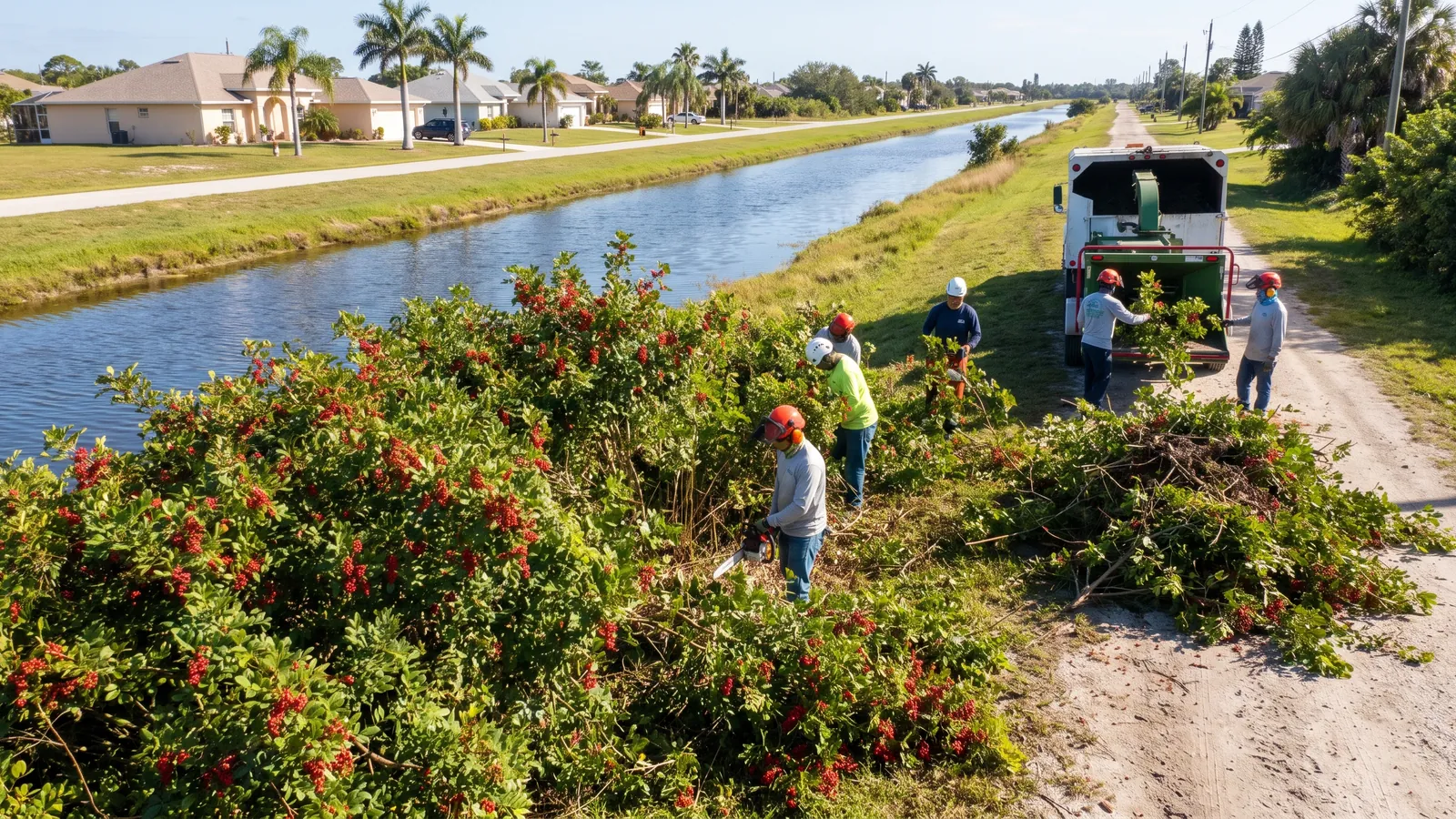
Brazilian pepper & invasives
Pepper thickets, Australian pines and melaleuca cut, stumps treated so they don't resprout, canal banks and lot lines cleared — no permit needed.
Invasive removal →Three numbers that decide most Palm Bay tree calls
Palm Bay is a 100-square-mile General Development grid of quarter-acre lots, and the city's landscape code was written with that in mind. Here's what actually governs whether a tree can come down — and who pays if it comes down on its own.
The line where Palm Bay's permit kicks in
Single-family and two-family lots under an acre are exempt from the city's tree-removal permit, and the invasive species on the city's list are exempt everywhere. Over an acre, commercial or in a planned development, the Planning Division reviews a site plan in about seven business days. Residential lots are still expected to keep a minimum number of trees, two of them native.
The statute that overrides every local rule
Florida Statute 163.045 says no local permit, notice or replacement can be required to remove a tree on residential property when an ISA Certified Arborist (or a licensed landscape architect) has documented that it poses an unacceptable risk. Our arborist writes that letter when the assessment supports it — and tells you when it doesn't, because a letter written to order isn't worth the paper in Melbourne or Satellite Beach.
What insurance pays for a standing tree
A tree on the house, the cage or the fence after a storm is usually covered, minus your deductible, plus a small hauling allowance. A tree that falls in the yard and hits nothing generally isn't, and taking down a dangerous tree before it falls never is. Which is why the free estimate comes with an honest read on which trees on your lot are worth the money now.
Four trees that keep our phone ringing
Laurel oaks
Planted by the thousand in the '70s and '80s because they grow fast; hollow at the base by 50, and Palm Bay's first-wave laurel oaks are there now. The tree most likely to be on a roof after the next storm.
Laurel vs. live oak →Slash & sand pines
The original flatwoods trees on every lot. Root-cut by a driveway, pool or drainfield, they die from the top and snap 20 feet up in 70-mph wind — Milton's gusts hit 80 on the coast in October 2024.
Removal →Queen & sabal palms
A bacterial disease spread by planthoppers is killing queen, sabal and date palms across Brevard: bronzed lower fronds, dropped fruit, dead spear. There's no cure once it shows; removal stops it spreading to the neighbors' palms.
Palm removal →Brazilian pepper
The invasive that ate the canal banks, lot lines and the Compound. Shallow-rooted, brittle, a fire and mosquito harbor, and exempt from every tree permit in the county. Cut it, treat the stump within minutes or it comes straight back.
Pepper removal →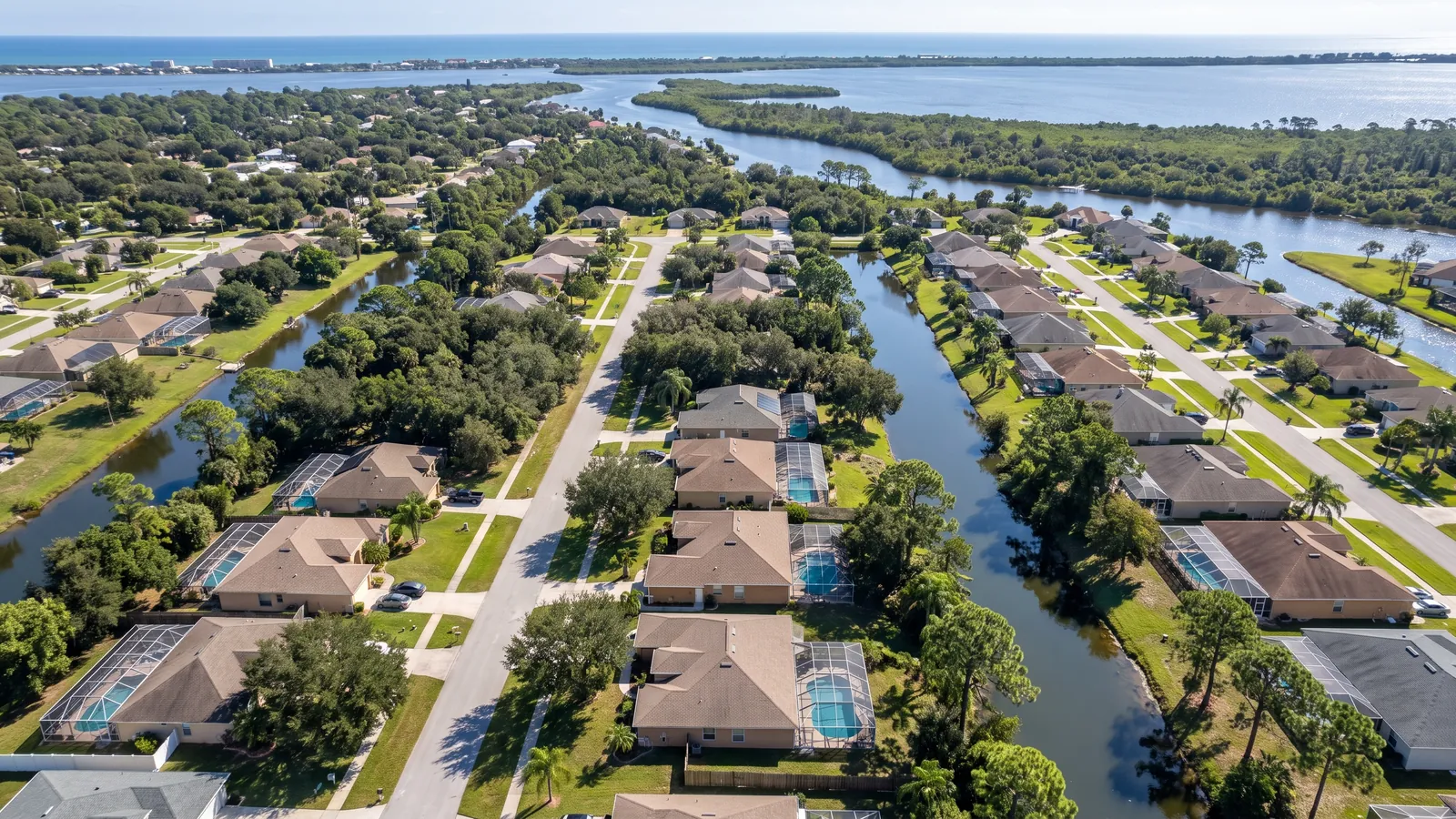
Palm Bay is a hundred square miles of platted lots under a canopy that's getting old
General Development Corporation platted Port Malabar in 1959 as tens of thousands of quarter-acre lots on a grid of streets and drainage canals west of the Indian River Lagoon, and the city that grew on it went from 119,760 people in the 2020 census to an estimated 146,929 by April 2025 — the largest city in Brevard County by a wide margin and one of the fastest-growing in Florida. The northeast quadrant along Palm Bay Road and Turkey Creek was built first, in the '70s and '80s; the southeast around Bayside Lakes in the 2000s; and the southwest — the Compound, Cypress Bay, the streets off the St. Johns Heritage Parkway — is being built out right now on lots that were pine flatwoods and palmetto two years ago.
That gives the city two kinds of tree problems at once. In the old quadrants it's the 50-year-old laurel oaks and root-cut slash pines from the first wave, the queen palms dying of lethal bronzing, and the Brazilian pepper that took over every canal bank and vacant lot. In the new ones it's land clearing, lot-line pepper, and the sand pines the builder left too close to the house. Over all of it is the storm calendar: Frances and Jeanne in 2004, Matthew in 2016, Irma in 2017, Ian and Nicole in 2022, Milton in October 2024 with 50–70 mph gusts inland and 80 on the coast, a tornado through Cocoa Beach and Merritt Island and seven more in Indian River County, and the brief EF-0 that uprooted a tree onto a Palm Bay house in September 2025.
So we do the things a tree company here should: put a certified arborist in front of every tree before anyone quotes it, rig near houses and pool cages instead of dropping and hoping, crane what can't be rigged, treat every pepper stump the minute it's cut, trim palms so they live, carry the insurance and show it, and answer the phone at 2 AM when the pine is on the lanai.
Four steps, no surprises
Call or send the form
A leaning oak, a dead pine, a palm that's gone bronze, a lot to clear — tell us what you're seeing. We answer around the clock.
Arborist walks the property
Usually within a day or two. Lean, root flare, decay, what it would hit, how the truck and the chipper get in — and whether a permit or a 163.045 letter applies.
Written, itemized price
Removal, trimming, stump, haul-off, crane if one's needed — every line, good for 30 days. No deposit until you approve and we schedule.
Done safely, yard raked
Climbed or bucketed, rigged over what matters, chipped and hauled, stumps ground if you asked, lawn raked. We walk the yard with you before the truck leaves.
From Port Malabar and Turkey Creek to Bayside Lakes, the Compound, Melbourne and the beaches
We're across Palm Bay every week: the 1970s and '80s canal homes of the northeast quadrant along Palm Bay Road, Port Malabar Boulevard and Turkey Creek; the newer streets of Bayside Lakes and the southeast; the Compound and the new builds of the southwest off Jupiter Boulevard and the St. Johns Heritage Parkway; and Lockmar, Emerald Lakes and the northwest along Minton Road and Malabar Road.
Beyond the city we cover Melbourne and West Melbourne, Satellite Beach, Indian Harbour Beach, Indialantic and Melbourne Beach, Malabar and Grant-Valkaria, Micco and Barefoot Bay, Sebastian, Vero Beach, Viera and Suntree, Rockledge and Cocoa, and Merritt Island and Cocoa Beach — every town of 10,000 or more within about thirty miles.
See the full service area →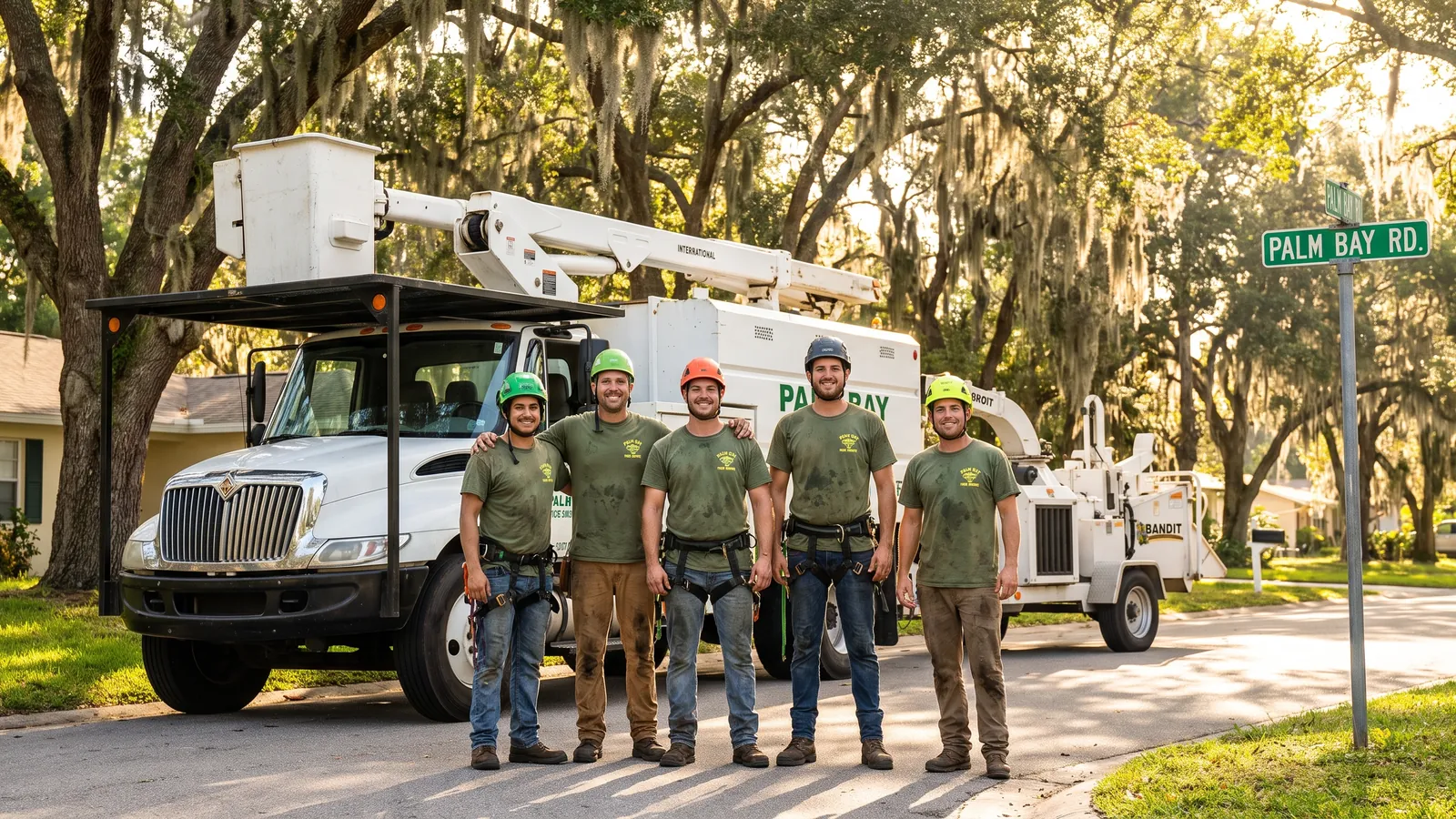
Questions Palm Bay homeowners ask us
Do I need a permit to remove a tree in Palm Bay?
On a single-family or two-family lot under an acre, generally no — Palm Bay's landscape code exempts those lots from its tree-removal permit, and it also exempts the invasive species on its list (Brazilian pepper, Australian pine, melaleuca, camphor, chinaberry, eucalyptus, castor bean) everywhere. Lots over an acre, commercial property and anything in a planned development go through the Planning Division, which reviews in about seven business days. Statewide, F.S. 163.045 lets you remove a tree on residential property without any local permit when an ISA Certified Arborist documents that it poses an unacceptable risk — our arborist writes that letter when the tree earns it. Melbourne, Satellite Beach and the other beach towns have their own tree ordinances, and some of them do require a permit on a house lot; we check before we cut.
How much does tree removal cost in Palm Bay?
Most removals land between $450 and $3,200 in 2026. A queen palm or a 30-foot slash pine on an open lot is on the low end; a 60-foot laurel oak leaning over the house, the pool cage or a canal is on the high end because it has to be climbed and rigged down in pieces or picked with a crane. Stump grinding is separate — $120 to $450 for most stumps — and so is hauling, which we include unless you want the wood. You get a written price after we've looked at the tree, not a guess from a photo.
Why do laurel oaks and old pines keep failing here?
Because Palm Bay was platted by General Development in the late 1950s and built in waves from the 1970s on, and the fast-growing trees planted then — laurel oaks and slash pines especially — are reaching the end of their lives now. A laurel oak lives about 50 to 70 years and rots from the inside as it goes; a slash pine that's been root-cut by a driveway, a pool or a septic drainfield dies from the top down and snaps in a storm. Add Ian and Nicole in 2022 and Milton's wind in October 2024, and the trees that were going to fail have been failing. Our arborist tells you which ones on your lot are worth keeping.
Can you trim my palms the right way?
Yes — and the right way is not the 'hurricane cut' that leaves a pineapple of five fronds on top. Over-pruning a palm starves it, invites disease and nutrient deficiency, and does not make it safer in a storm; the University of Florida's guidance is to take only fronds below horizontal. We remove the dead and dying fronds, the seed pods and the loose boots, leave the green canopy, and on sabals we can do it from the ground or a bucket without spiking the trunk. With lethal bronzing killing queen and sabal palms across Brevard, we also tell you when a palm is sick, not just untidy.
Will my insurance pay for tree removal?
If a tree falls on a covered structure — the house, the pool cage, the shed, the fence — a standard Florida homeowners policy usually pays to remove it from the structure and repair the damage, subject to your deductible, and often a few hundred dollars toward hauling the tree away. A tree that falls in the yard and hits nothing is generally not covered, and removing a standing tree before it falls is never covered. We document storm damage with dated photos and an itemized invoice you can send to your carrier; we don't offer coverage opinions.
Do you really answer at night during hurricane season?
24 hours a day, every day. Brevard took Frances and Jeanne three weeks apart in 2004, Matthew in 2016, Irma in 2017, Ian and Nicole in 2022 and Milton in 2024 — when a pine comes through the lanai at 2 AM the first hour matters. Call, tell us what's happened, and a crew is dispatched by priority: trees on houses and blocked driveways first, hanging limbs next, yard debris last.