Palm removal in Palm Bay — dead, diseased, leaning or just in the way
A queen palm gone bronze, a Washingtonia leaning at the house, a sabal the builder planted against the foundation, a coconut dropping on the lanai — cut in sections where it has to be, dropped where it can be, stump ground, gone.
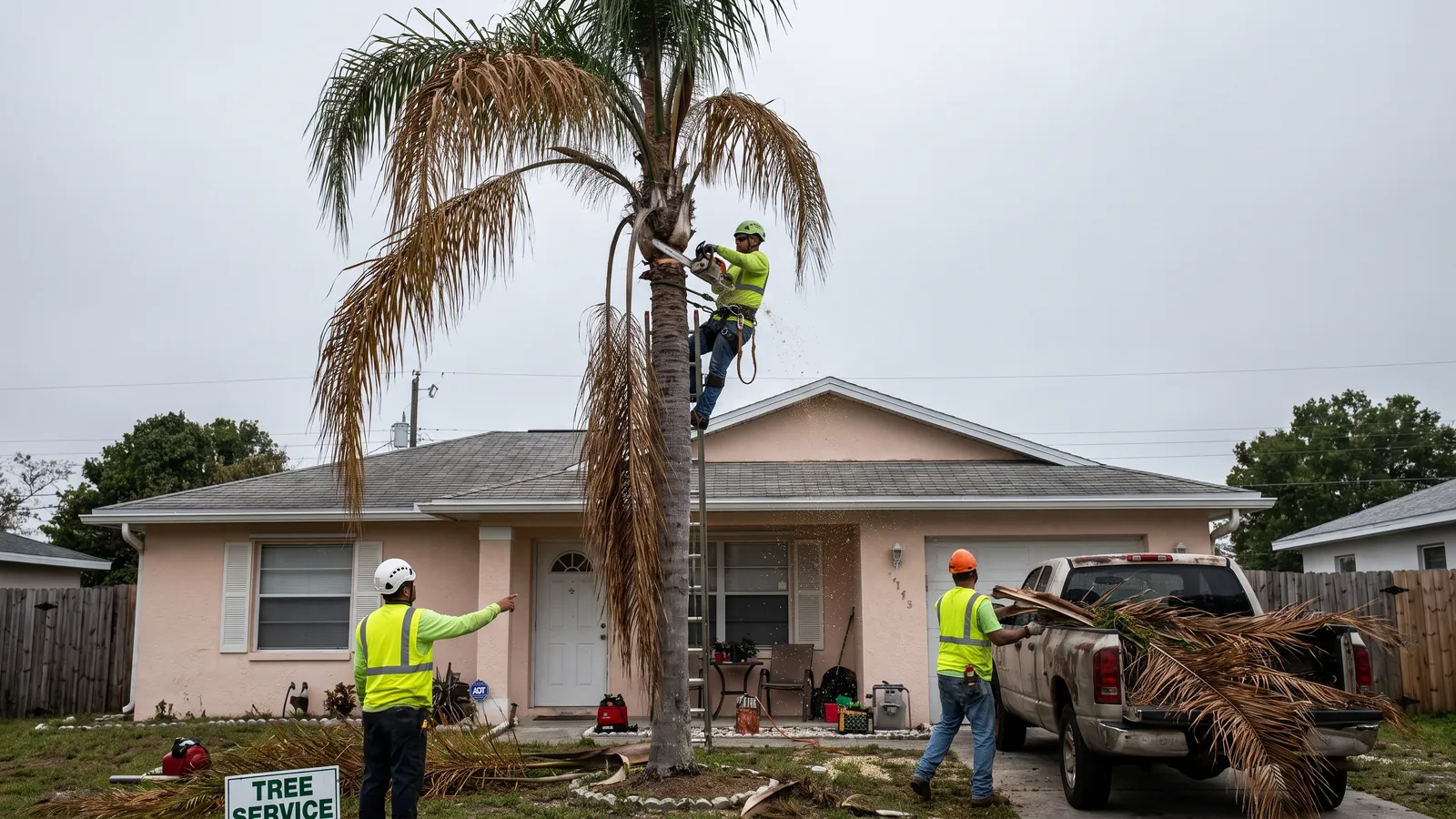
Palms come out of Palm Bay yards for four reasons, and one of them is new. The old three are position — a queen palm planted three feet from the foundation in 1985, a Washingtonia that leaned toward the house as it chased the light, a coconut over the pool cage that drops on the screen; storm damage — a snapped or uprooted palm after wind; and neglect — a palm so far gone it's a hazard. The new one is lethal bronzing, a bacterial disease carried by a small planthopper that arrived on the Space Coast a few years ago and has been killing queen palms, sabals, Canary Island dates and other species across Brevard since. It bronzes the lower fronds from the bottom up, drops the fruit early, kills the spear leaf, and kills the palm within months. There's no cure once it shows, and a dying palm is a reservoir for the planthoppers that carry it to the neighbors' palms, so the responsible thing is to take it out promptly.
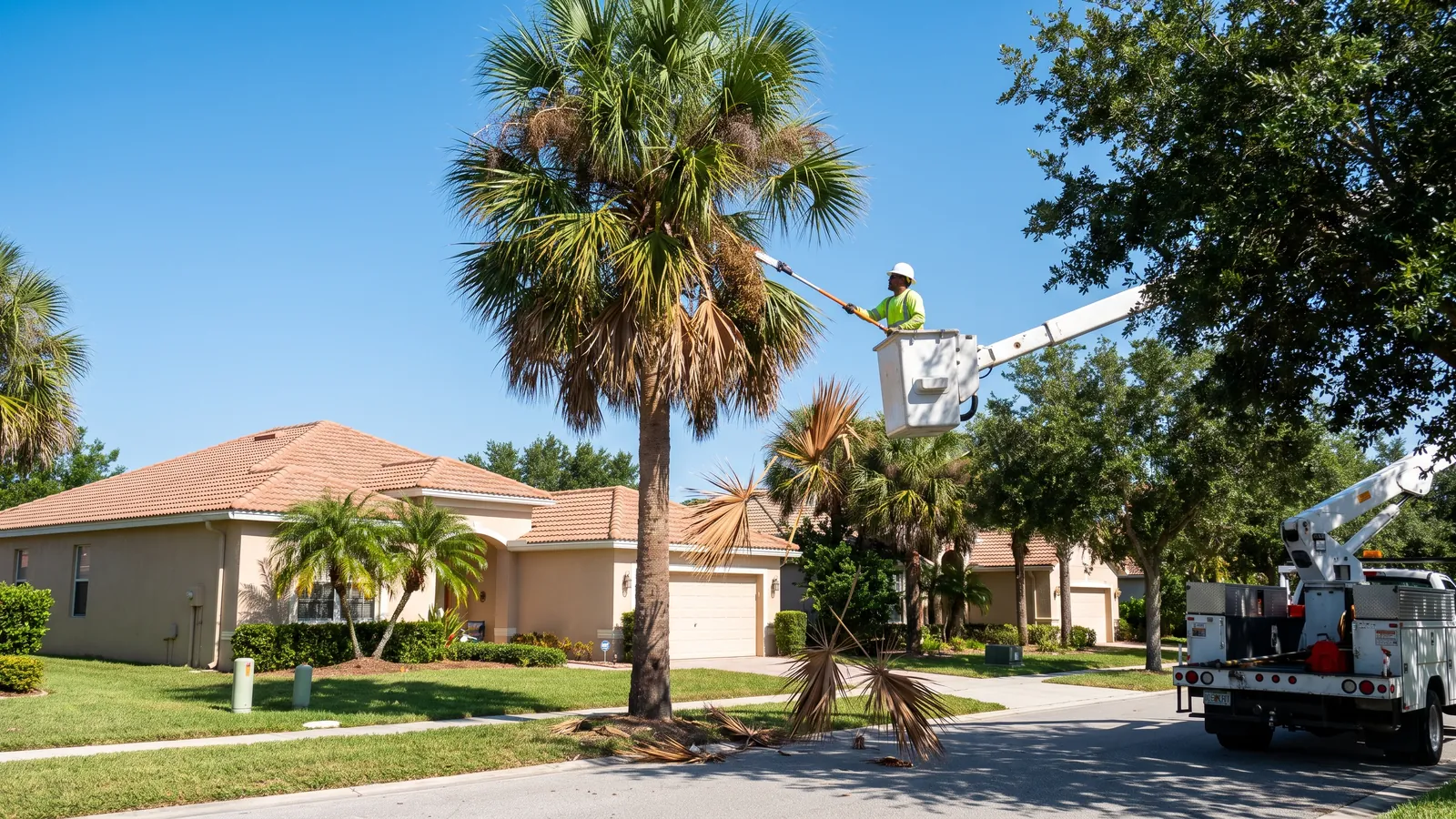
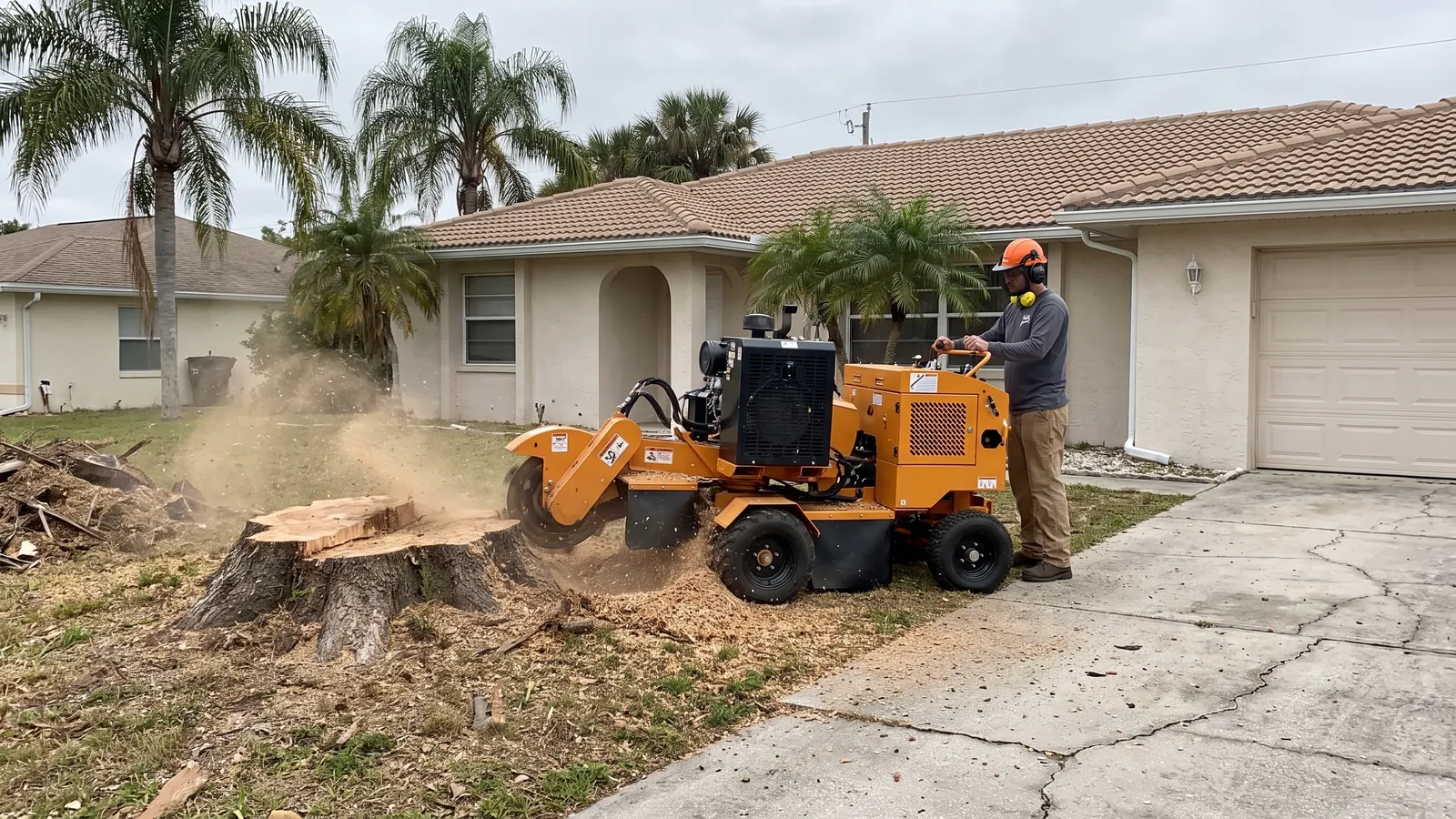
The removal itself is quick: a palm is a single trunk with no limbs to rig, so it's felled whole where there's room or chunked down from a bucket where there isn't, the stump is ground — palm stumps are fibrous and grind fast — and the fronds and trunk are hauled, because palm wood is useless as firewood and doesn't chip well. Sabals can also be relocated rather than removed if you want to keep one that's in the wrong place; they transplant better than almost any tree. No permit is needed for a palm on a Palm Bay house lot; Melbourne and the beach towns treat palms differently and we check.
What's included
Lethal-bronzing removals
Diseased palms out promptly and hauled, not left curbside for the planthoppers; advice on protecting the palms that are left.
Leaners and wire-growers
Washingtonias and queens that leaned toward the house or grew into the FPL drop, sectioned down from the bucket.
Storm-damaged palms
Snapped and uprooted palms after wind, lifted off cages and fences, roots and all.
Stump ground
Fibrous palm stumps ground below grade and backfilled — usually the same visit.
Relocation option
Sabals that are healthy and in the wrong place dug and moved instead of killed; they take transplanting well.
Hauled, not chipped
Palm trunk and fronds hauled off the lot; the bed raked and ready to replant.
Palm removal cost in Palm Bay, FL
| Job | Typical price | Notes |
|---|---|---|
| Queen palm or sabal, open access | $300 – $650 | Felled whole, hauled |
| Tall Washingtonia or date palm, sectioned from the bucket | $500 – $1,100 | Skirt and trunk chunked |
| Coconut or royal palm over a cage or pool | $450 – $950 | Roped down |
| Lethal-bronzing removal, per palm | $350 – $900 | Prompt scheduling |
| Stump grinding, palm (added) | $90 – $220 | Fast — fibrous |
| Sabal relocation on the same lot | $400 – $900 | Season and size dependent |
These are 2026 Brevard County ranges so you can budget. Your written price is itemized — the climb or bucket work, rigging, crane if needed, chipping and haul-off, stump grinding — and good for 30 days.
Recent work
Questions we get about palm removal
How do I know my palm has lethal bronzing?
The pattern is lower fronds turning a bronze-brown from the bottom of the canopy up, fruit dropping before it's ripe, and the newest spear leaf dying. It moves fast — a palm can go from first symptoms to dead in a few months. Uniform yellowing with healthy new growth is usually a nutrient problem instead. The arborist looks on the visit; a lab test through the University of Florida confirms it.
Should I remove a palm with lethal bronzing or wait?
Remove it. There is no cure once symptoms show, the palm will die, and while it dies it's feeding the planthoppers that carry the disease to every queen and sabal on the street. If you have high-value palms nearby, preventive antibiotic injections every few months can protect them, and we can point you to who does them.
Do I need a permit to remove a palm in Palm Bay?
Not on a single- or two-family lot under an acre — Palm Bay's landscape code exempts those lots. Lots over an acre and commercial parcels go through the Planning Division. Melbourne, Satellite Beach and the other beach towns have their own rules, and some protect native sabals; we check before we cut.
Can you move my sabal instead of cutting it down?
Often, yes. Sabal palms are among the easiest trees to transplant — they're dug with a small root ball, the fronds are tied up, and they re-root in a season. Queens and Washingtonias move less well. It's worth it for a healthy sabal in the wrong spot; it isn't for a sick one.
What happens to the palm trunk?
It's hauled. Palm wood doesn't burn, doesn't chip cleanly and rots slowly, so it goes to the yard-waste facility rather than into your firewood pile.